

Benzene: Interpreting Your Indoor Air Test Results
Benzene (CAS No. 71-43-2) is a volatile organic compound (VOC) belonging to the aromatic hydrocarbon family that is found in homes. Given that this pollutant is a known carcinogen, an indoor air test is recommended for bedrooms, children’s rooms, and living areas.
You have conducted an indoor air quality test using a Scan4Home test kit and received your test results. Here are some guidelines to help you interpret your results.
WHO guideline value for benzene
The WHO recommends that benzene concentrations remain below 2 µg/m³. This value is based on a lifetime exposure risk of 1 in 100,000 of developing cancer.
Reference values for benzene in France
ANSES (the French Agency for Food, Environmental and Occupational Health & Safety) has established an Indoor Air Quality Guideline Value (VGAI) for benzene of 10 µg/m³.
Since 2024, the High Council for Public Health (HCSP) has recommended a guideline value of 6 µg/m³.
Dans le cadre de la surveillance de la qualité de l'air intérieur dans les Etablissement Recevant du Public (ERP) d'accueil de l'enfance, une valeur d'information a été définie à 2 µg/m3 et une valeur d'alerte à 10 µg/m3. La valeur d'information choisie est inférieure à la VGAI car les enfants sont particulièrement sensibles à la pollution de l'air intérieur.
Reference statistical values for benzene in residential buildings in France
The Observatory for Indoor Environmental Quality (OQEI) conducted the National Housing Campaign 2 between November 2020 and February 2023.
The data collected during this campaign provide an overview of benzene pollution in French homes.
- The median benzene concentration measured was 0.92 µg/m³, indicating that one in two homes has a benzene concentration higher than this value.
- The 90th percentile (P90) value measured was 1.68 µg/m³, meaning that one in ten homes has a benzene concentration higher than this value.
Scan4Toxic Interpretation Guide for Benzene
To interpret your test results, Scan4Toxic recommends using the reference values of 2 µg/m³ and 10 µg/m³.
- A result below 2 µg/m³ indicates low levels of benzene in indoor air, posing no health risk to occupants under daily exposure.
- A result above 2 µg/m³ indicates moderate levels of benzene in indoor air. It is recommended that measures be taken to improve indoor air quality.
- A result above 10 µg/m³ indicates high levels of benzene in indoor air, and health risks to occupants cannot be ruled out. It is urgent to take action to improve indoor air quality.
What steps should be taken to improve indoor air quality in the event of benzene contamination?
Improving indoor air quality rests on three pillars:
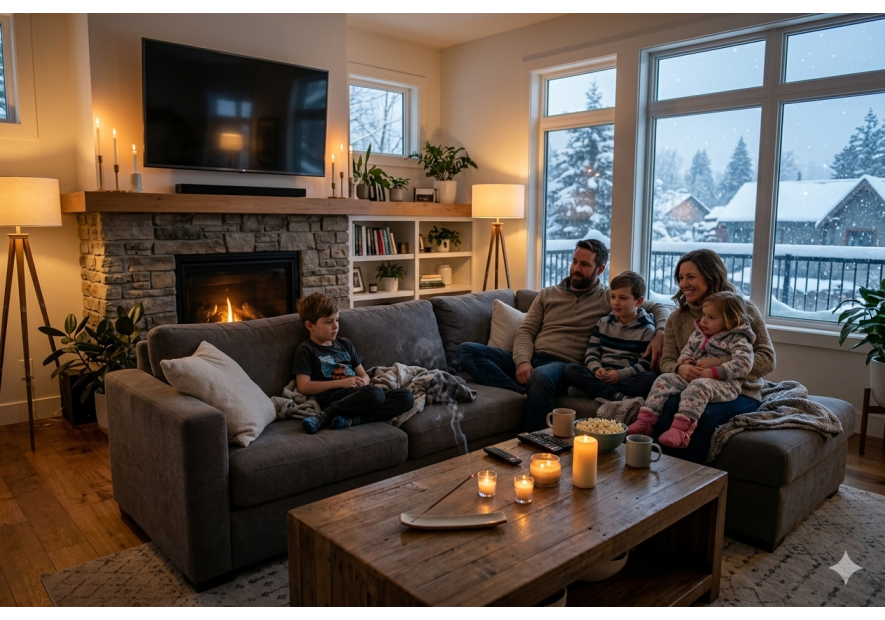
- Identify and eliminate sources of pollution: Benzene can originate from outside the home (traffic, etc.), combustion heating systems (wood/pellet stoves, fireplaces, etc.), the presence of fuel (vehicles in a garage attached to the home), and combustion processes (candles, incense, etc.)
- Ventilate to refresh indoor air: Outdoor air is 5 to 10 times less polluted than indoor air. Ventilating your home daily can significantly reduce the concentration of benzene in indoor air. It is recommended to ventilate your home at least twice a day for 10 minutes by creating a draft.
- Treat indoor air: Using an indoor air purifier should be considered a last resort if the first two solutions are not sufficiently effective.
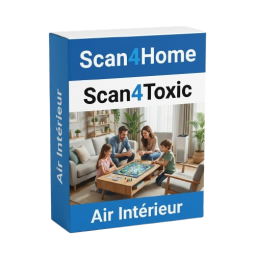
Scan4Home - VOC Scan4Home - VOC
Comprehensive testing kit to measure Volatile Organic...
Comprehensive testing kit to measure Volatile Organic Compounds (VOCs) in indoor air of homes or offices and to assess the indoor air quality. Measures over 30 VOCs. Indoor air contains many toxic chemicals, and testing it allows you to take steps to protect your health on a daily basis.
Price €199.00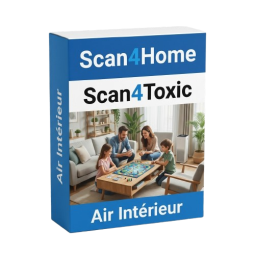
Scan4Air - Indoor Air Screening Scan4Air - Indoor Air Screening
Complete test kit to measure Volatile Organic Compounds (VOCs)...
Complete test kit to measure Volatile Organic Compounds (VOCs) in indoor air pollution in homes and offices, featuring non-targeted screening and quantitative analysis of over 30 VOCs. Indoor air contains many toxic chemicals, and testing it allows you to take steps to protect your health on a...
Price €499.00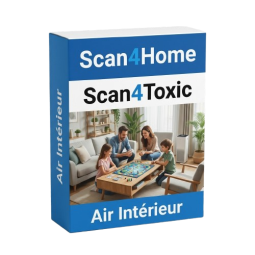

Scan4Home - Indoor Air Scan4Home - Indoor Air
Complete test kit to measure Volatile Organic Compounds (VOCs)...
Complete test kit to measure Volatile Organic Compounds (VOCs) and aldehydes in indoor air in homes and offices. Measures over 60 VOCs and aldehydes. Indoor air contains many toxic chemicals, and testing it allows you to take steps to protect your health on a daily basis.
Price €299.00