

PAHs and Fire Residues: How Can You Verify the Effectiveness of Decontamination at Your Construction Sites?
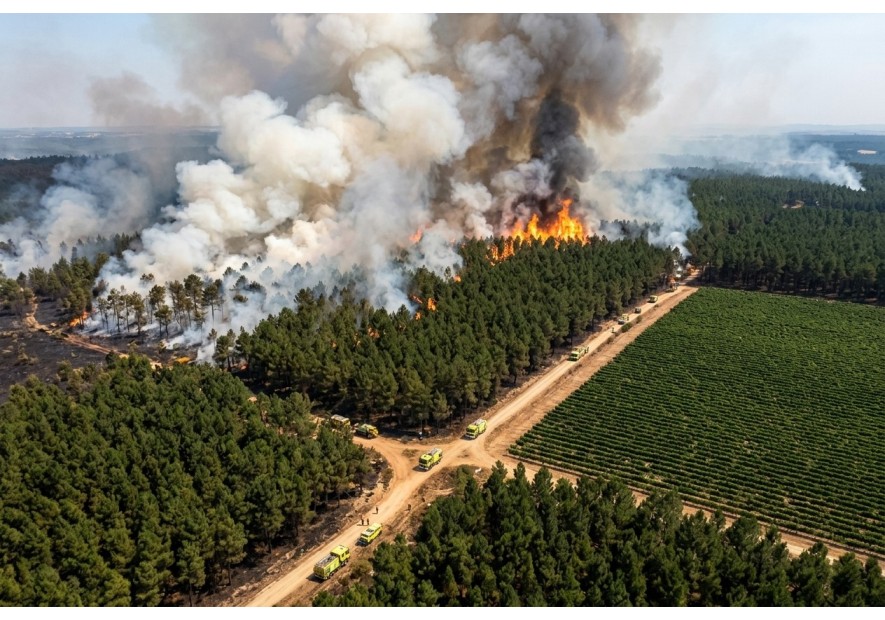
After a fire, even once the flames have been extinguished, the danger does not disappear entirely. While the physical damage is visible, a far more insidious threat lingers in the soot and deposits: Polycyclic Aromatic Hydrocarbons (PAHs). For restoration professionals, the issue is no longer just about cleaning, but about proving the effectiveness of decontamination to ensure a healthy environment for occupants.
PAHs: The Toxic Residue from Fires
PAHs are byproducts of the incomplete combustion of organic materials (wood, plastics, hydrocarbons). They are extremely stable "fire markers" that settle on all surfaces in the form of fine soot particles.
The issue is not merely aesthetic; it is a health concern. Most of these compounds are classified as carcinogenic, mutagenic, or toxic to reproduction by the WHO and the IARC (International Agency for Research on Cancer). For a decontamination expert, ensuring effective decontamination means eliminating these molecules, which can be absorbed through the skin or inhaled by the future occupants of the home.
Why is visual cleanliness an illusion?
In the disaster response sector, it has long been assumed that a wall that "looks clean" is decontaminated. This is a fundamental mistake. PAHs are microscopic and can persist in the pores of materials or as invisible films even after standard cleaning.
Without scientific measurement, it is impossible for a service provider to verify the effectiveness of decontamination. Insurance experts and homeowners are becoming increasingly demanding: they no longer want just a house that smells clean; they demand a house that is clean at the molecular level. This is where the measurement protocol becomes your best business and legal ally.
The Scan4Work HAP Surface Protocol: Measure to Verify
The Scan4Work HAP Surface kit was specifically designed to meet the precision requirements of post-fire specialists. It is based on a rigorous swab sampling method, with samples subsequently analyzed by a specialized laboratory.
Initial condition: Pre-treatment assessment
Before beginning any cleaning work, it is crucial to take an initial sample. This step allows for an accurate assessment of the initial level of contamination. This information is essential for:
- Determine the necessary cleaning resources.
- Justify the estimate to the insurers.
- Serve as a benchmark for verifying the effectiveness of the final decontamination.
Wipe sampling: The gold standard
The sample is collected using a special wipe on a defined area (typically 50 x 50 cm, using a template).
This "mechanical" method removes PAHs bound to soot from various surfaces (floors, countertops, walls). The wipe is then sealed and sent to the laboratory.
Compare to verify the effectiveness of decontamination
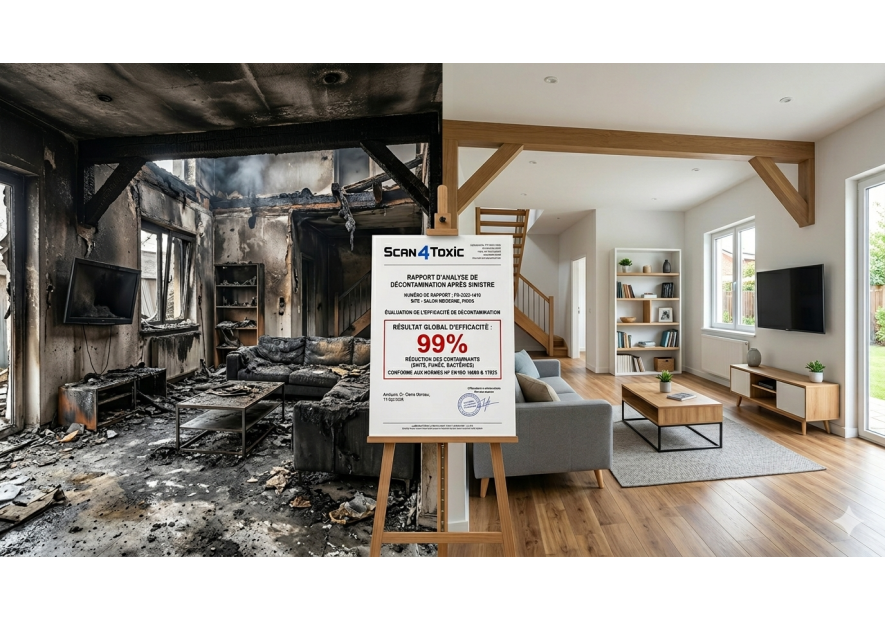
The key to added value for a professional lies in the "before and after" comparison. Once the project is complete, a second sample is taken from the same or similar areas.
Laboratory analyses provide reliable and accurate measurements, expressed in µg/m². These analysis reports serve as irrefutable proof that pollutants have been reduced to acceptable or undetectable levels. This is the only tangible way to close a claim file while ensuring there is no residual risk.
Showcase your industry expertise
By integrating the Scan4Work kit into your processes, you’re no longer just selling cleaning services—you’re offering a health guarantee. The effectiveness of decontamination becomes a powerful selling point against the competition. You protect your professional liability by demonstrating that you’ve taken the necessary steps to eliminate an identified carcinogenic risk.
Managing PAHs after a fire is a major environmental health issue. With Scan4Toxic kits, you can move from a duty of care to a demonstration of results. Leave no room for doubt: measure, prove, and ensure your customers’ safety.
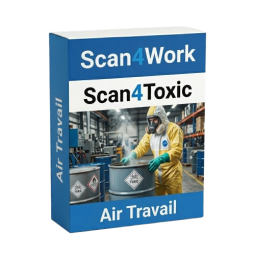

Scan4Dust - HAP Lingette Scan4Dust - HAP Lingette
Complete test kit to assess the effectiveness of post-fire...
Complete test kit to assess the effectiveness of post-fire decontamination. Provides accurate and reliable measurements of PAH (polycyclic aromatic hydrocarbons) combustion residues, which are classified as carcinogens.
Price €199.00