
Living in a burned-out home: What are the hidden health risks?
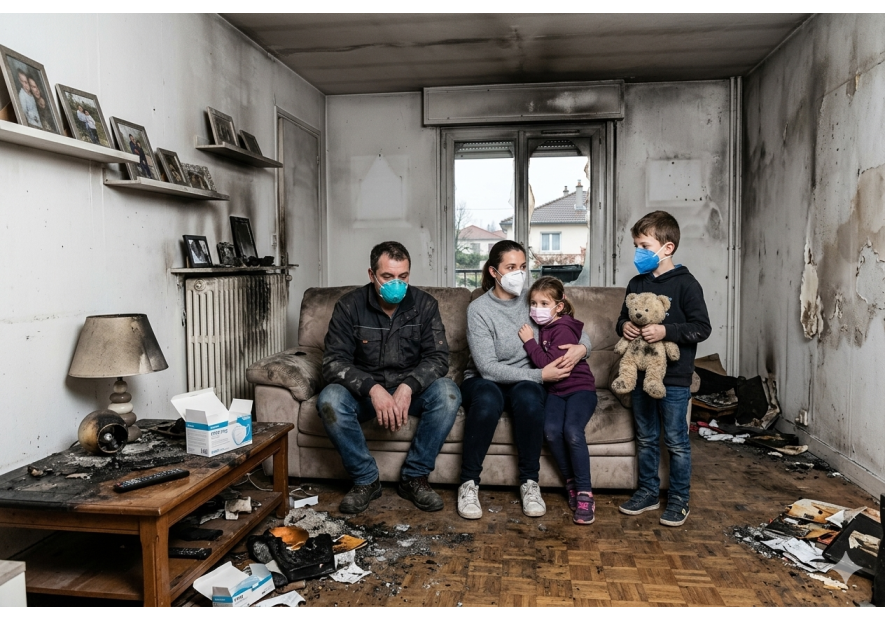
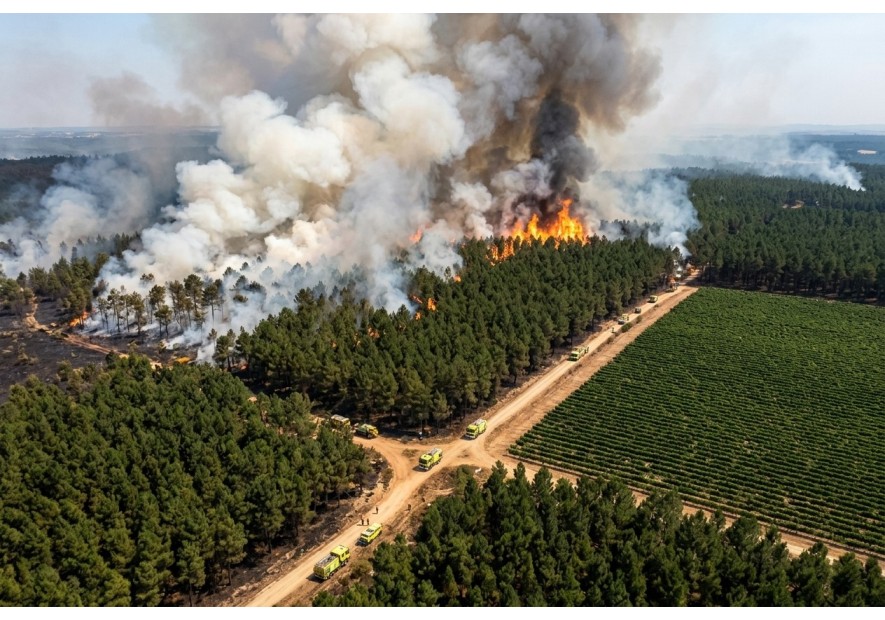
After the fire department has responded and the flames have been extinguished, the first instinct is often to assess the damage and, if possible, return to the premises as soon as possible. However, the end of the fire does not mark the end of the danger. Returning to a fire-damaged home too soon exposes occupants to an invisible but persistent threat: residual chemical contamination. While the ashes are visible, the toxic molecules suspended in the air or embedded in textiles are not. Understanding the real impact of a fire on air quality is the first step toward safely reclaiming your home.
The Impact of a Fire on Indoor Air Quality
A fire isn't just destruction caused by heat; it's an open-air chemical reactor. As they burn, modern materials (plastics, insulation, sofa foam, furniture varnish) release a cocktail of toxic substances.
Even if the fire was contained to a single room, smoke spreads throughout the entire space. The air quality in a home that has suffered a fire is severely compromised by:
- PAHs (Polycyclic Aromatic Hydrocarbons): Resulting from incomplete combustion, many of them are classified as carcinogens by the WHO.
- Soot and fine particles: They carry pollutants deep into the lungs.
- VOCs (Volatile Organic Compounds): They evaporate from heated or partially burned materials and saturate the air with irritating gases.
This pollution cannot be removed simply by ventilating the room. It settles on surfaces and is gradually released into the indoor air over a period of months.
Can I still live in my home after a fire?
That’s the question everyone is asking. The short answer is: not without certainty. The smell of smoke is an indicator, but its absence does not guarantee safety. In a home that has been damaged by fire, even after surface cleaning, compounds such as benzopyrene can persist at alarming levels. Moving back in without a prior assessment exposes you to headaches, nausea, severe respiratory irritation, and, in the long term, an increased risk of chronic health conditions.
Expert advice: If you experience throat or eye irritation upon entering the room, the level of pollutants is still too high. But be careful: some pollutants are odorless and cause no immediate irritation, yet they are highly toxic.
How can you assess indoor air pollution after a fire?
The assessment must be scientific. You cannot "guess" the concentration of PAHs by smell. To determine whether a home that has been damaged by fire is safe to live in again, an air quality assessment must be conducted.
Traditionally, this required the involvement of expensive engineering firms. Today, the approach has changed. The assessment must focus on living areas (bedrooms, living room) to verify whether the fire’s “chemical signature” has been removed by cleaning or whether it persists at dangerous levels. The goal is to capture airborne molecules over a given period to obtain a representative average of what you are actually breathing.
Scan4Home Fire: Laboratory-grade accuracy at your fingertips
To address this concern, Scan4Toxic has developed the Scan4Home - Fire test kit. This device is specifically designed for homeowners and experts who need to determine whether a fire-damaged home is safe to live in.
Why choose this test kit?
- PAH Analysis: The kit specifically targets polycyclic aromatic hydrocarbons (PAHs), the most dangerous markers of fire residue.
- Ease of Use: You don’t need to be a technician. The passive sensor is simply placed in the room to be tested.
- Scientific rigor: The sample is analyzed by a specialized laboratory using chromatography, ensuring reliability equivalent to industrial testing.
- Decision support: The final report clearly indicates whether the measured levels pose a health risk to occupants or whether decontamination has been successful.
Using Scan4Home turns a source of anxiety into hard facts. It’s the essential tool for reassuring a family, verifying the work of a cleaning company, or justifying additional decontamination measures to an insurance provider. Don’t take any risks with your lungs: before sleeping in a fire-damaged home again, make sure the air you breathe there is safe once more.
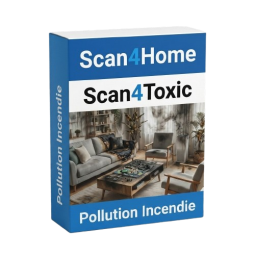
Scan4Home - Fire Pollution Scan4Home - Fire Pollution
This testing kit allows you to measure the level of...
This testing kit allows you to measure the level of carcinogenic combustion residues in your indoor environment following a fire. Your dust sample is analyzed in a laboratory for Polycyclic Aromatic Hydrocarbons (PAHs).
Price €199.00 Regular price €249.00

Scan4Dust - HAP Lingette Scan4Dust - HAP Lingette
Complete test kit to assess the effectiveness of post-fire...
Complete test kit to assess the effectiveness of post-fire decontamination. Provides accurate and reliable measurements of PAH (polycyclic aromatic hydrocarbons) combustion residues, which are classified as carcinogens.
Price €199.00