


The Importance of Indoor Air Quality Testing for Protecting Your Health
Once a complex and costly process, environmental testing has become widely accessible. Thanks to user-friendly tools, good indoor air quality is now within everyone’s reach. By identifying invisible sources of pollutants—whether they’re VOCs emitted by furniture, decorative products, or chemical residues—you can take concrete steps to minimize risks. An indoor air quality test provides you with the data you need to transform your home into a truly healthy space.
Air Quality: A Public Health Challenge and a Right Accessible to All
The facts are clear: we spend 80% of our time inside buildings where the air is more polluted than the air outside. This is due to pollutants emitted from sources such as furniture, paint, household products, and cosmetics, as well as our lifestyle, combined with increasingly well-insulated buildings and a lack of air exchange (air circulation, ventilation).
This pollution significantly affects our health and has a direct impact on conditions such as asthma. Indeed, it is no small matter to breathe in, on a daily basis, chemicals that are allergenic, carcinogenic, neurotoxic, or capable of affecting our body’s reproductive or hormonal functions.
In the face of this daily threat, improving indoor air quality goes beyond public health issues and must become a personal concern. The purpose of conducting an indoor air quality test is to assess the level of indoor pollution in homes and workspaces (offices and meeting rooms).
What Does an Indoor Air Quality Test Involve?
Indoor air pollution takes many forms due to the variety of chemical and biological pollutants present in indoor environments.
An indoor air quality test involves accurately measuring pollution levels. There are two complementary areas of IAQ testing: electronic sensors and laboratory analyses.
QAI's electronic sensors: They provide data on parameters such as fine particulate matter, CO2, temperature, and humidity. Real-time measurements allow for immediate action to improve the situation.
Laboratory analyses: These provide information on the chemical and biological composition of the indoor environment. Thus, only a laboratory-based indoor air quality test can accurately identify the pollutants present and allow for direct action to be taken against their sources.
This may involve assessing the following pollutants:
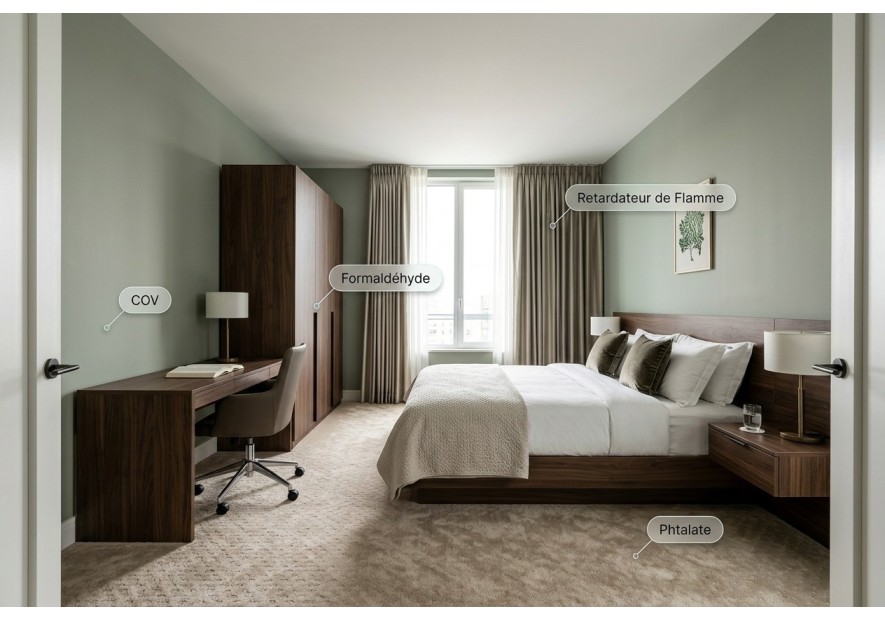
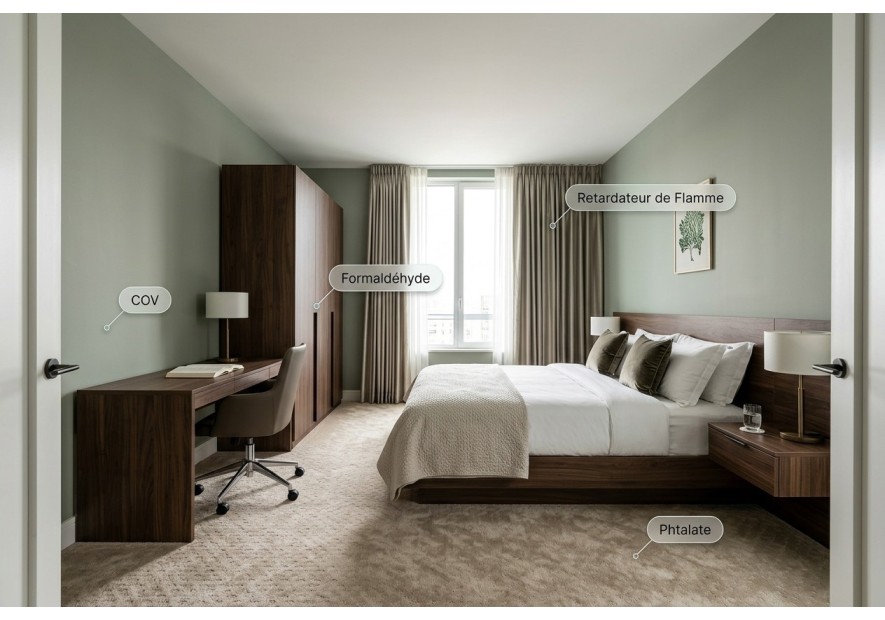
Volatile Organic Compounds (VOCs): Present in the air in gaseous form, they are captured using activated carbon. Laboratory analysis will make it possible to precisely identify which VOCs are present in indoor air.
Formaldehyde, aldehydes, and ketones: A specific family of VOCs detected using a reagent (DNPH).
Semi-Volatile Organic Compounds (SVOCs): They are found on dust and fine particles. Among the most common SVOCs in indoor environments are phthalates (plastic additives), pesticides, flame retardants (fire-retardant additives), persistent organic pollutants (POPs), and PAHs (polycyclic aromatic hydrocarbons, combustion residues).
Allergens: Dust mites, mold, dogs, cats... They are found in dust and fine particles.
Heavy metals: Lead, cadmium... They are also found in dust and fine particles.
Depending on the type of pollutants being tested for, it will therefore be necessary to collect an air or dust sample.
5 Steps to Improve Your Indoor Air Quality (IAQ)
To improve your respiratory health and comfort in the long term, here are five essential steps based on the results of an indoor air quality test:
Identify your sources of pollution: Conduct an indoor air quality test to pinpoint the sources of pollutants in your home.
Prioritize effective ventilation: Make sure your mechanical ventilation system is well-maintained, and ventilate your home for at least 10 minutes a day, both in summer and winter, to refresh the air.
Limit chemical emissions: Replace scented household products, candles, and incense with natural, unscented alternatives that are gentler on the respiratory tract.
Manage humidity: Maintain an optimal humidity level (between 40% and 60%) to prevent mold growth.
Choose healthy materials: When making future purchases or undertaking renovations, opt for building materials and furniture labeled "A+" to minimize the release of volatile pollutants.
By following these steps after conducting an indoor air quality test, you can take direct and effective action to protect your health and that of your loved ones in the long term.
Scan4Home - VOC Scan4Home - VOC
Comprehensive testing kit to measure Volatile Organic...
Comprehensive testing kit to measure Volatile Organic Compounds (VOCs) in indoor air of homes or offices and to assess the indoor air quality. Measures over 30 VOCs. Indoor air contains many toxic chemicals, and testing it allows you to take steps to protect your health on a daily basis.
Price €199.00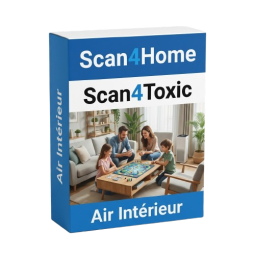
Scan4Home - Aldehydes Scan4Home - Aldehydes
Complete Indoor Air test kit to measure aldehydes and ketones...
Complete Indoor Air test kit to measure aldehydes and ketones in in indoor air of homes or offices and to assess the indoor air quality. Measures over 10 aldehydes and ketones. Indoor air contains many toxic chemicals, and testing it allows you to take steps to protect your health on a daily basis.
Price €199.00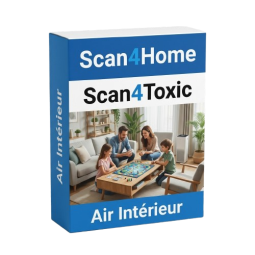

Scan4Home - Indoor Air Scan4Home - Indoor Air
Complete test kit to measure Volatile Organic Compounds (VOCs)...
Complete test kit to measure Volatile Organic Compounds (VOCs) and aldehydes in indoor air in homes and offices. Measures over 60 VOCs and aldehydes. Indoor air contains many toxic chemicals, and testing it allows you to take steps to protect your health on a daily basis.
Price €299.00