


Why assess the occupational exposure of workers handling CMR chemicals ?
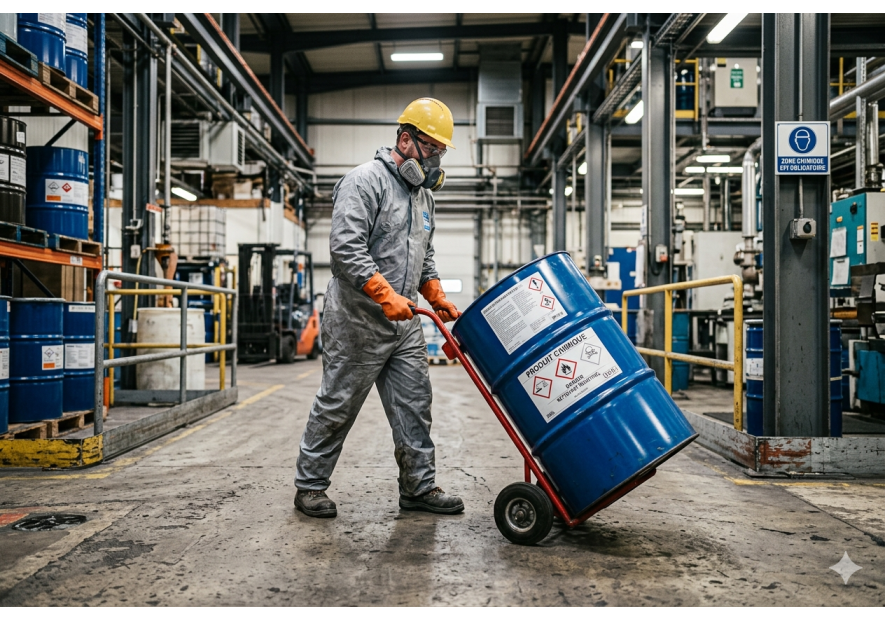
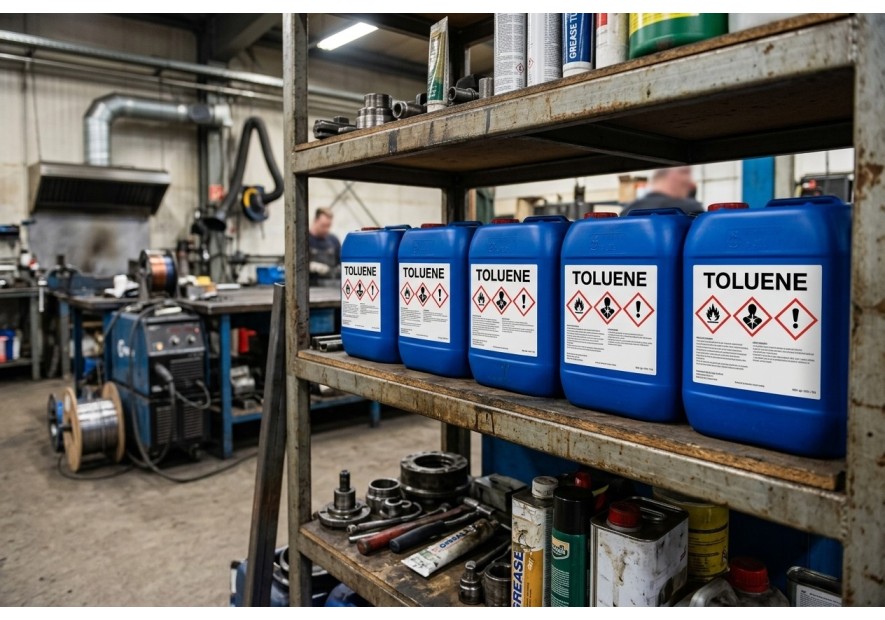
In many sectors—including the chemical and pharmaceutical industries, laboratories, maintenance, and the food processing industry—workers are required to handle hazardous substances. Some of these substances are classified as CMR: carcinogenic, mutagenic, or toxic to reproduction. These chemical agents pose serious, often irreversible, risks to workers’ health.
Assessing occupational exposure to these substances is not just a best practice; it is a regulatory requirement and a major public health issue. In France, chemical risk prevention is based on a specific legal framework and occupational exposure limit values (OELs) that must be strictly adhered to.
The regulatory framework for assessing occupational exposure to CMR agents
Regulations require increased vigilance regarding occupational exposure to CMR-classified substances. The main relevant provisions are found in the Labor Code.
The requirement to assess occupational exposure risk
Employers are required to identify the hazardous chemicals used in their workplace, assess the associated risks, and implement appropriate preventive measures.
This assessment must be documented in an Occupational Risk Assessment Document and updated at least once a year or whenever there is a change in work procedures.
The hierarchy of prevention principles
The Labor Code establishes a hierarchy of preventive measures:
- Substitution: Replace the CMR substance with a less hazardous substance, if technically feasible;
- Process containment to prevent release into the air;
- Adequate ventilation and source capture;
- Collective and personal protective equipment (CPE/PPE);
- Enhanced medical surveillance for exposed workers.
European laws and regulations
National regulations are based on several European directives, including:
- Directive 98/24/EC on the protection of workers' health from the risks related to chemical agents;
- Directive 2004/37/EC, specifically concerning CMR substances, revised in 2022 to strengthen protection requirements.
These regulations govern the assessment, monitoring, and control of occupational exposure to levels that are acceptable for human health.
The Public Health Significance of Measuring Occupational Exposure to CMR Agents
A major public health issue
CMR substances can cause delayed effects, sometimes several years after exposure: cancers (benzene, asbestos, formaldehyde), genetic mutations, or fertility problems.
According to the authorities, approximately 15% of adult cancers are believed to be linked to occupational exposure, underscoring the importance of a rigorous assessment.
Occupational Exposure Limits (OELs)
OCCs represent the maximum concentration of a chemical in workplace air that must not be exceeded in order to prevent adverse health effects.
These values are expressed in:
- TWA-8h (Time-Weighted Average): weighted average over an 8-hour workday;
- STEL (short-term exposure level): 15-minute average.
For example:
- Benzene (carcinogen, CAS 71-43-2): The TWA-8h is 3,25 mg/m³ (1 ppm)
- Formaldehyde (carcinogen and mutagen): The TWA-8h is 0,37 mg/m³ (0,3 ppm and the STEL is 0,738 mg/m3 (0,6 ppm)
These limits are regularly updated based on available toxicological and epidemiological data.
Measurement campaigns and biological monitoring of occupational exposure
Occupational exposure can be measured by:
- Air quality monitoring at workstations (ambient air, personal air sampling)
- Biological monitoring (urine or blood tests for certain metabolites).
These campaigns make it possible to verify regulatory compliance, assess the effectiveness of protective measures, and adjust corrective actions.
Assessing to Better Prevent Occupational Diseases
Assessing occupational exposure is more than just an administrative formality. It is a key tool for managing chemical risks.
- A proactive assessment approach makes it possible to:
- Identify the most at-risk workstations
- Prioritize substitution and containment measures
- Demonstrate regulatory compliance during a Labor Inspection audit
- Improve workplace well-being and operator confidence.
Exposure analysis is part of a culture of sustainable prevention, in which objective measurement forms the foundation of workplace safety.
In conclusion, assessing workers’ occupational exposure to CMR chemicals is both a mandatory regulatory requirement and an essential public health necessity. It ensures the protection of workers, reduces the risk of serious occupational diseases, and contributes to the company’s overall performance.
In this context, Scan4Toxic offers simple and reliable measurement tools to help companies manage their occupational exposure to chemical agents and comply with regulatory occupational exposure limits.
Scan4Work - Benzene Scan4Work - Benzene
Complete testing kit for measuring air quality in workplaces...
Complete testing kit for measuring air quality in workplaces and occupational exposure to benzene (CAS 71-43-2), classified as carcinogenic and mutagenic. Exposure to benzene can cause occupational diseases.
Price €99.00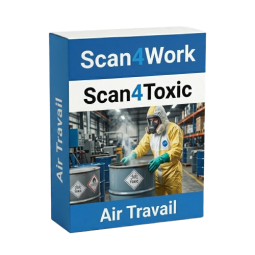
Scan4Work - Formaldehyde Scan4Work - Formaldehyde
Complete testing kit for measuring workplace air quality and...
Complete testing kit for measuring workplace air quality and occupational exposure to formaldehyde (CAS 71-43-2), which is classified as a carcinogen. Exposure to formaldehyde can cause occupational diseases.
Price €99.00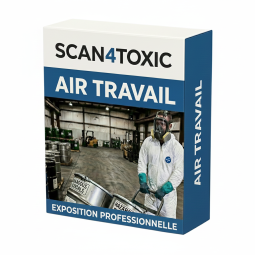

Scan4Air Kit - VOC Screening Scan4Air Kit - VOC Screening
Complete analysis kit for measuring air quality in workplaces...
Complete analysis kit for measuring air quality in workplaces and occupational exposure to VOCs. Exposure to VOCs can cause occupational diseases.
Price €499.00