

Analysis of Aldehydes in Indoor Air: Findings from the National Housing Study

The quality of the air we breathe at home has become a major public health concern. According to data from the National Housing Study 2 (ENL2) conducted by the OQEI, our homes harbor invisible yet ubiquitous chemical pollutants. To understand the scope of this phenomenon, an analysis of VOCs in indoor air is essential, as it reveals the near-universal presence of substances from the aldehyde family. Among these, three molecules stand out for their prevalence and irritant potential: formaldehyde, acetaldehyde, and hexaldehyde.
Focus on three major pollutants: Sources and origins
These three substances belong to the aldehyde family, a group of highly volatile organic compounds that have many sources in our homes.
Formaldehyde
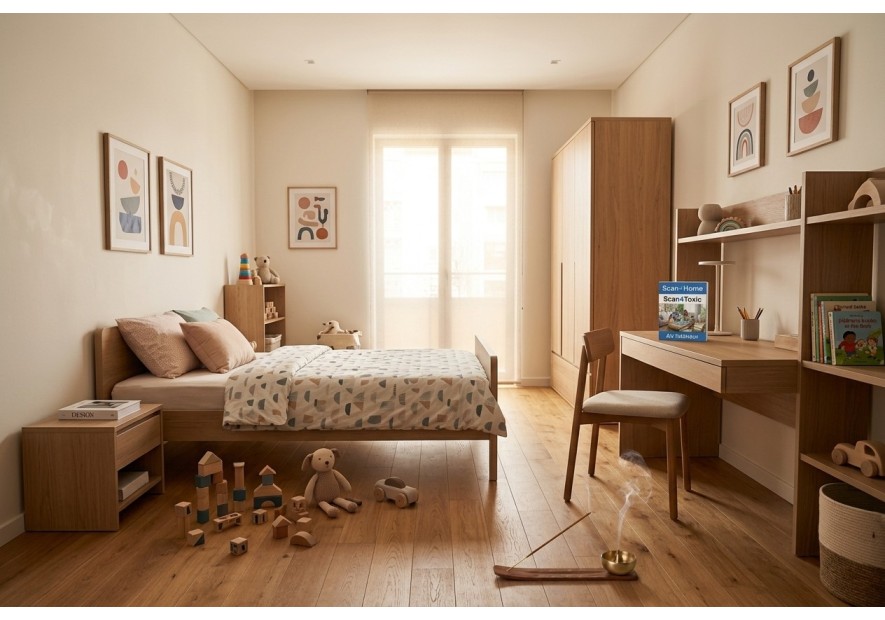
It is the most closely monitored pollutant. It is found primarily in the adhesives and resins used to manufacture particleboard furniture, flooring, and insulation foam, as well as in certain textiles and during combustion (candles, incense, cigarettes) as well as in household products for its biocidal properties.
Acetaldehyde
This compound is often produced by combustion, but it also occurs naturally in wood and is released by certain building materials and decorative products. It is also a breakdown product of certain organic materials.
Hexaldehyde
Although less well known to the general public, it is nevertheless very common. Its main sources include wood-based materials, linoleum-type flooring, and the oxidation of fatty acids contained in finishing products.
A near-constant presence in our homes
The results of the national study are unequivocal regarding the frequency of detection. A France-wide analysis of aldehydes in indoor air shows that these pollutants are not the exception, but the norm.
The data reveals that acetaldehyde and hexaldehyde have a detection rate of 100%. This means that none of the homes tested were free of these substances. Formaldehyde, meanwhile, is present in 99.7% of homes. These figures prove that chemical pollution spares no household, making air quality monitoring all the more essential for vulnerable populations.
Comparison of measurements with reference values
The purpose of testing for aldehydes in indoor air is to compare the measured levels with health safety thresholds.
Acetaldehyde
With a median concentration of 8.27 µg/m³, levels remain well below the reference value of 160 µg/m³. No exceedances were observed in the national housing stock.
Formaldehyde
A public health concern. This is where the results are most concerning. The median level is 14.0 µg/m³, but there is significant variation.
The threshold of 30 µg/m³ (the benchmark value for public buildings such as daycare centers and schools) is exceeded in more than 1.8 million homes in France, representing approximately 6% of the housing stock.
The ANSES Indoor Air Quality Guideline Value (VGAI), set at 100 µg/m³, is the current reference threshold for protecting the general public from toxic effects.
The World Health Organization (WHO) recommends not exceeding 123 µg/m³ (0.1 mg/m³) to avoid sensory irritation and carcinogenic risks.
Hexaldehyde
Although its median concentration is 12.3 µg/m³ with peaks reaching up to 80.1 µg/m³, there is still no strict regulatory reference value, even though its irritating properties are well documented.
What are the health effects?
Breathing in these substances on a daily basis is not harmless. Formaldehyde is classified as a Group 1 carcinogen by the IARC for nasopharyngeal cancer. At lower doses, it causes eye and respiratory irritation, as well as allergic skin reactions.
Acetaldehyde is classified as a possible carcinogen (Group 2B) and also acts as a mucosal irritant.
Hexaldehyde, although less potent, contributes to the “cocktail effect” of indoor pollution, which can exacerbate symptoms of asthma or chronic fatigue in occupants. Without testing for aldehydes in indoor air, these symptoms often remain unexplained.
Taking Action with Scan4Home Kits: Measure to Protect
Given the invisible nature of these threats, the only reliable solution is scientific measurement. Scan4Home offers specialized testing kits for aldehydes and ketones. These devices allow you to perform your own indoor air VOC analysis with laboratory-grade accuracy.
By using a Scan4Home kit, you can get an accurate measurement of formaldehyde and other aldehyde levels in your bedroom, living room, or your children’s bedroom. This is a proactive step to protect your health and that of your loved ones. Once you have the results, you can determine whether your levels fall within the national average or exceed the ANSES or WHO thresholds, allowing you to take the necessary corrective measures (increased ventilation, replacing furniture, or removing polluting products).
Choosing to have your indoor air tested for aldehydes with Scan4Home means taking control of your home environment for a healthier, more peaceful living space.
Scan4Home - Aldehydes Scan4Home - Aldehydes
Complete Indoor Air test kit to measure aldehydes and ketones...
Complete Indoor Air test kit to measure aldehydes and ketones in in indoor air of homes or offices and to assess the indoor air quality. Measures over 10 aldehydes and ketones. Indoor air contains many toxic chemicals, and testing it allows you to take steps to protect your health on a daily basis.
Price €199.00

Scan4Home - Indoor Air Scan4Home - Indoor Air
Complete test kit to measure Volatile Organic Compounds (VOCs)...
Complete test kit to measure Volatile Organic Compounds (VOCs) and aldehydes in indoor air in homes and offices. Measures over 60 VOCs and aldehydes. Indoor air contains many toxic chemicals, and testing it allows you to take steps to protect your health on a daily basis.
Price €299.00