

Analysis of VOCs in Indoor Air: How Can You Effectively Protect Your Health?
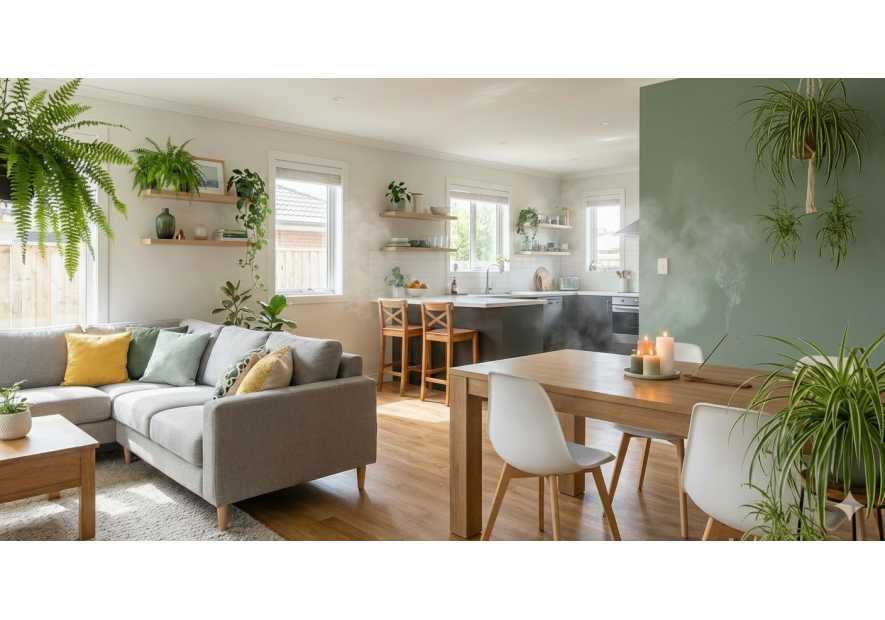
On average, we spend 80 to 90% of our time indoors, whether at the office, on public transportation, or—most often—at home. Yet the air we breathe indoors is often more polluted than the air outside. At the heart of this issue lies a family of invisible yet ubiquitous pollutants: Volatile Organic Compounds (VOCs). Conducting an indoor air VOC analysis is now an essential step for anyone who wants to transform their home into a true sanctuary of health, free from the chemical fumes of everyday life.
What are VOCs, and why are they so prevalent in our homes?
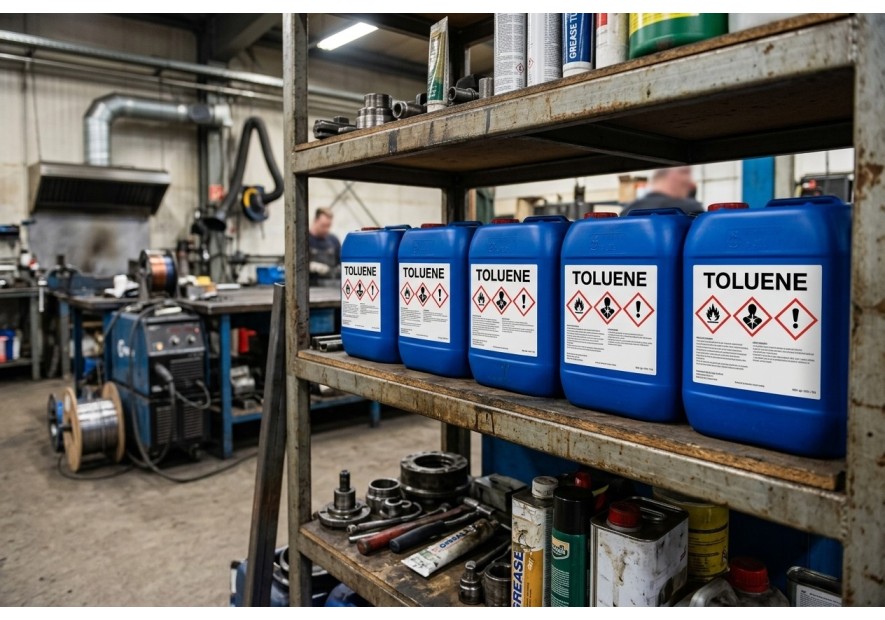
Volatile Organic Compounds (VOCs) are a broad group of chemicals that evaporate easily at room temperature. Among the most well-known are formaldehyde (classified as a known carcinogen), benzene, and toluene. These gases do not come from a single source, but from a mix of objects and products we use every day.
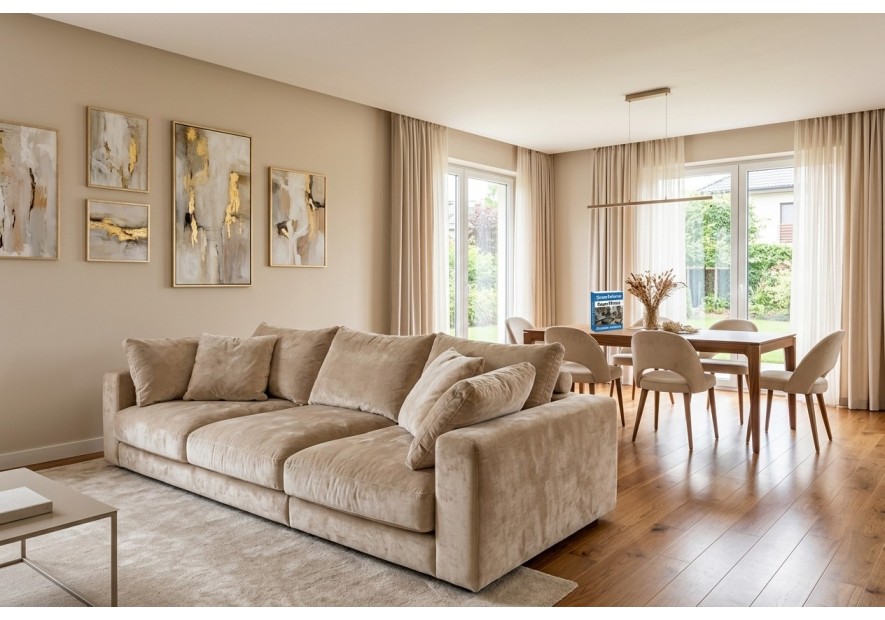
VOC pollution is particularly insidious because it is "silent." It stems from the breakdown of adhesives in our furniture, solvents in paints, and preservatives in our cleaning products. In our homes, which are increasingly well-insulated to meet energy efficiency goals, these pollutants become trapped. Without regular indoor air VOC testing, the concentration of these substances can reach critical levels, far exceeding public health guidelines.
Health Concerns: Why Reduce Indoor Pollution?
VOCs have a wide-ranging impact on the body. In the short term, high exposure can cause irritation of the eyes, nose, and throat, chronic headaches, fatigue, or dizziness. This is sometimes referred to as "sick building syndrome." In the longer term, the risks are far more serious: the development of allergies, asthma, respiratory problems, and, for certain compounds, an increased risk of cancer or endocrine disruption.
Why is testing for VOCs in indoor air important? Because it allows us to move from suspicion to action. Reducing this pollution provides a healing environment for the lungs and the immune system, especially for vulnerable populations such as infants, pregnant women, and the elderly.
A Practical Guide to Reducing Pollutant Emissions
To improve your indoor air quality, the first rule is to eliminate pollutants at the source. Here are some steps you can take right away:
Ventilation: the first step
Open your windows for at least 10 minutes, twice a day, no matter the season. This helps reduce the concentration of air pollutants.
Choosing household products
Choose products with eco-labels, or better yet, go back to simple solutions like white vinegar, baking soda, and castile soap. Avoid aerosol sprays that release tiny droplets of chemicals directly into your respiratory tract.
Materials and Decor
When renovating, choose paints and varnishes rated "A+" (low-emission). Be aware, however, that even an A+ product emits VOCs. Tests for VOCs in indoor air often show a spike in pollution in the months following a renovation.
Low-emission furniture
Flat-pack furniture (made of particleboard or MDF) is a major source of formaldehyde due to the adhesives used in its construction. Opt for solid wood or secondhand furniture that has already had time to off-gas over several years.
The Trap of Perfumes and "Natural" Products
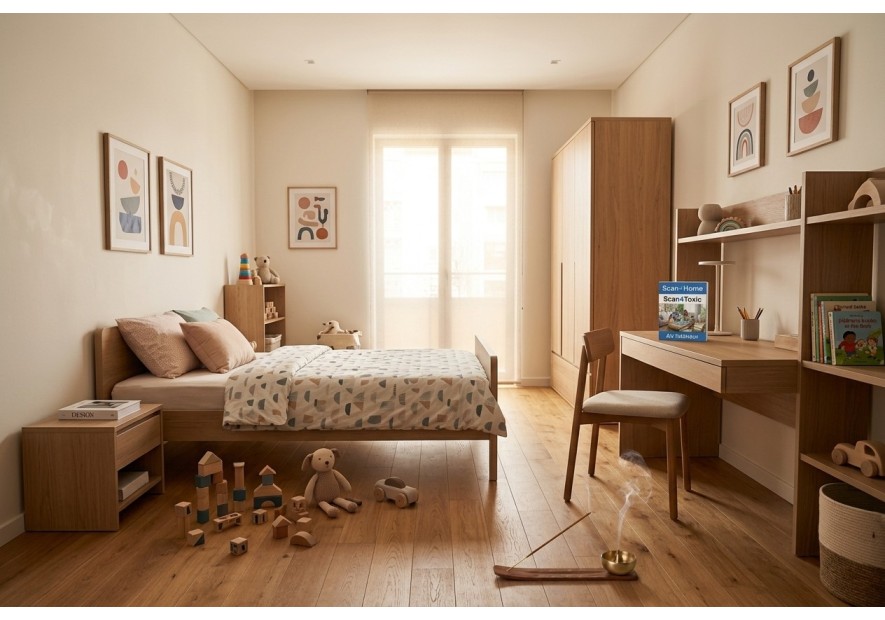
This is a common mistake. Scented candles, incense, and even essential oils release VOCs (such as limonene) and fine particles when burned or diffused. For your home to smell “clean,” it shouldn’t smell of anything at all.
Measure to Act: The Scan4Home Solution
No matter how hard you try, it’s impossible to determine the exact composition of the air you breathe without scientific tools. Supplementing your preventive measures with an analysis of VOCs in indoor air is the only way to verify the effectiveness of your efforts to break bad habits.
This is where the Scan4Home testing kits come in. Designed to be easy to use yet professionally accurate, these kits allow you to analyze VOCs in indoor air under real-world conditions. Simply place the passive sensor in the room of your choice, let it sit for the specified amount of time, and then send it to our partner laboratory.
You’ll then receive a clear and detailed report that assesses your indoor air quality and identifies the primary types of pollutants. Investing in an indoor air VOC analysis with Scan4Home means you can stop guessing and start truly protecting your home. It’s the essential assessment you need to ensure your prevention efforts are effective and to guarantee healthy air for your loved ones.
Scan4Home - VOC Scan4Home - VOC
Comprehensive testing kit to measure Volatile Organic...
Comprehensive testing kit to measure Volatile Organic Compounds (VOCs) in indoor air of homes or offices and to assess the indoor air quality. Measures over 30 VOCs. Indoor air contains many toxic chemicals, and testing it allows you to take steps to protect your health on a daily basis.
Price €199.00
Scan4Home - Aldehydes Scan4Home - Aldehydes
Complete Indoor Air test kit to measure aldehydes and ketones...
Complete Indoor Air test kit to measure aldehydes and ketones in in indoor air of homes or offices and to assess the indoor air quality. Measures over 10 aldehydes and ketones. Indoor air contains many toxic chemicals, and testing it allows you to take steps to protect your health on a daily basis.
Price €199.00

Scan4Home - Indoor Air Scan4Home - Indoor Air
Complete test kit to measure Volatile Organic Compounds (VOCs)...
Complete test kit to measure Volatile Organic Compounds (VOCs) and aldehydes in indoor air in homes and offices. Measures over 60 VOCs and aldehydes. Indoor air contains many toxic chemicals, and testing it allows you to take steps to protect your health on a daily basis.
Price €299.00