

How can you measure fire smoke pollution in your home using the Scan4Toxic fire pollution testing kit?
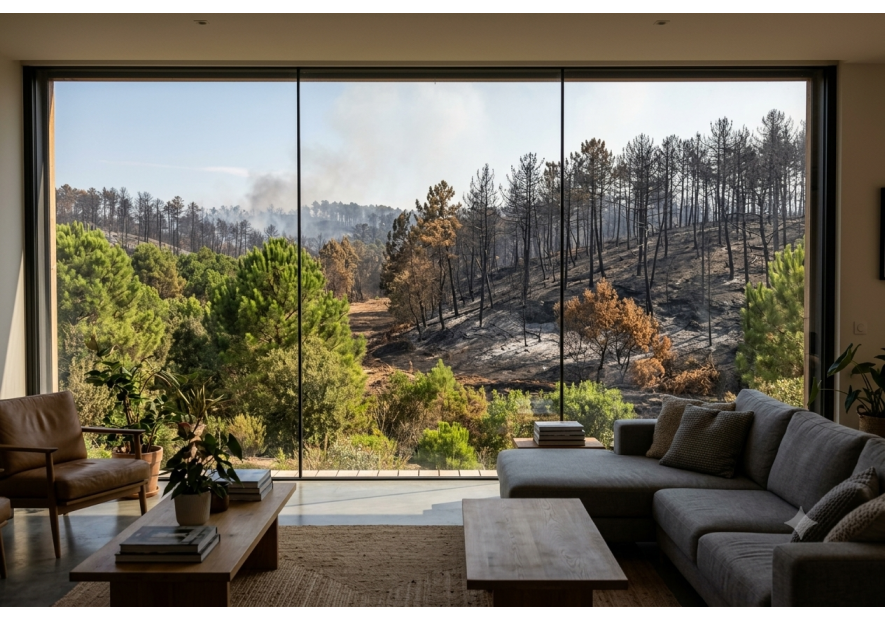
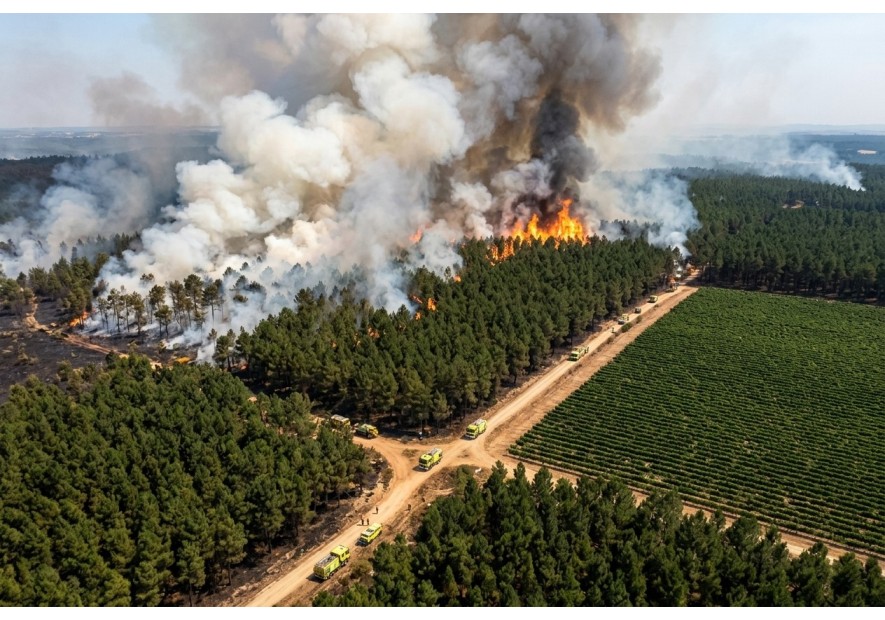
When a disaster occurs near populated areas, the consequences extend far beyond the visible perimeter of the flames. During a wildfire near a home, smoke contaminated the residence with PAHs (polycyclic aromatic hydrocarbons). This was exactly the case with the July 2026 fire in Gironde, where the flames swept through tens of thousands of hectares of forest and affected several thousand homes. While outdoor smoke eventually dissipates, fire-related pollution seeps in and settles permanently inside homes, posing an invisible threat to occupants.
PAHs: Persistent and Toxic Combustion Byproducts
Polycyclic Aromatic Hydrocarbons (PAHs) are organic chemical compounds formed during the incomplete combustion of organic matter such as wood, vegetation, or various synthetic materials.
Once released into the atmosphere in the form of gases and fine soot, these residues settle on indoor surfaces and become embedded in household dust. Fire pollution caused by PAHs has two major characteristics:
High persistence
PAHs are highly stable chemicals and do not simply disappear by airing out a room. They become embedded in textiles (sofas, rugs, curtains), settle on furniture, and accumulate in the soil.
Proven Toxicity
Several PAHs (such as benzo[a]pyrene CAS 50-32-8) are classified as carcinogens, mutagens, and reproductive toxins by health authorities. They also cause severe respiratory irritation, neurotoxic effects, and disrupt the immune system.
Because of this persistence, pollution levels following a fire often pose a high and prolonged health risk to residents, particularly young children and people with respiratory conditions.
Assessing Fire Pollution with the Scan4Toxic Kit
To address this critical public health situation, Scan4Toxic has developed a testing kit specifically designed to accurately assess the level of contamination in your home.
The procedure is based on a simple and scientifically rigorous method for quantifying fire pollution:
1 - Targeted sampling with the Scan4Dust collector: A dust sample is collected using the innovative Scan4Dust device included in the kit. It attaches to a standard vacuum cleaner to easily collect particles settled in your living spaces.
2 - Sending the sample to the lab: The sample is sent to the lab by mail using the prepaid envelope provided in the test kit (France only).
3 - High-precision laboratory analysis: The sample is sent back to the laboratory, where it is analyzed using gas chromatography coupled with mass spectrometry (GC-MS). This state-of-the-art technology enables definitive identification and an extremely reliable and precise measurement of each PAH present.
4 - Expert Report and Interpretation: The results are interpreted and presented in a comprehensive report. This document provides a clear assessment of the level of PAH contamination resulting from the fire and guides you on the decontamination measures to be taken.
Measuring smoke pollution in your home is an essential step in determining whether a home is truly safe and in ensuring the long-term health of the entire family after smoke has cleared.
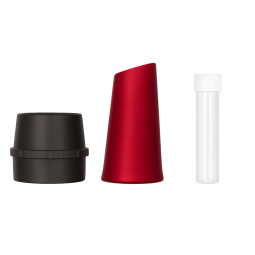
Scan4Dust - Dust Collector Scan4Dust - Dust Collector
The Scan4Toxic sampling kit allows you to collect a dust...
The Scan4Toxic sampling kit allows you to collect a dust sample to assess indoor air quality in your home. Dust contains many toxic chemicals, and analyzing it helps you take steps to protect your health on a daily basis. This sample collection kit does not include analysis of your dust sample....
Price €49.00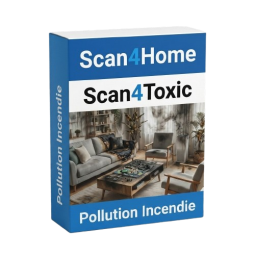

Scan4Home - Fire Pollution Scan4Home - Fire Pollution
This testing kit allows you to measure the level of...
This testing kit allows you to measure the level of carcinogenic combustion residues in your indoor environment following a fire. Your dust sample is analyzed in a laboratory for Polycyclic Aromatic Hydrocarbons (PAHs).
Price €199.00 Regular price €249.00