




The PTS Wristband and Phthalates: Accurately Assessing Our Exposure to Endocrine Disruptors

Our modern environment is saturated with plastics and synthetic chemicals. While some have undeniably improved our quality of life, others are now causing serious concern within the medical and scientific communities. At the heart of these environmental concerns lies a family of ubiquitous chemicals: phthalates. Faced with this invisible threat, technological research has had to adapt, and the scientific collaboration between the PTS wristband and phthalate testing is opening up new avenues for mapping and understanding our personal daily exposure to chemicals.
What are phthalates, and why are they everywhere?
Phthalatesare organic chemical compounds that have been widely used by industry since the 1950s. Their main role? To act as "plasticizers." When added to rigid plastics, such as polyvinyl chloride (PVC), they soften the material, making it flexible, stretchy, and impact-resistant. They are also used as binding agents or solvents in a wide variety of liquid products.
The main problem with phthalates lies in their chemical structure. Unlike other additives, phthalates are not chemically bonded (via covalent bonds) to the plastic matrix that contains them. They are simply “mixed in.” The direct consequence is that, over time—due to heat, friction, or the aging of the material—they migrate and are released into the air, into water, or directly onto our skin. It is this volatility that makes the analytical coupling between the PTS wristband and phthalates so effective for tracking these escaping molecules.
The Serious Health Effects of Phthalates
Continued exposure to these molecules is not without risk to the human body. Global epidemiological and toxicological studies have classified phthalates among the pollutants of greatest concern to public health, due to three major harmful effects:
A role as an endocrine disruptor
Phthalates can mimic, block, or alter the action of our natural hormones (particularly testosterone and estrogen). They act like fake keys in the locks of our cells, disrupting the thyroid system and overall development.
A severe reprotoxic effect
Many phthalates are toxic to human reproduction. In men, they are linked to the global decline in sperm quality and quantity. In pregnant women, fetal exposure can lead to genital malformations in male infants (such as hypospadias) and neurodevelopmental disorders.
A potential carcinogen
Chronic exposure to some of these plasticizers is now suspected of contributing to the development of hormone-dependent cancers, such as breast, prostate, and testicular cancer.
"Criminals" Under the Microscope: The Main Phthalates
The large family of phthalates includes dozens of derivatives. Among those most commonly tested for in environmental toxicology analyses is a specific list of molecules with complex names, yet whose presence is a part of everyday life. Here are the main compounds that scientists are tracking:
Butyl Benzyl Phthalate (BBP): Widely used in vinyl flooring, sealants, and certain synthetic leathers.
Di-Ethyl-Hexyl-iso-Phthalate (DEHiP): A plasticizer used in specialty polymers.
Di-Ethyl-Hexyl Phthalate (DEHP): This is the best-known and, historically, the most abundant phthalate. Long ubiquitous in medical devices (blood bags, catheters) and soft plastic toys, it is now one of the most strictly regulated. As a result, exposure to DEHP is declining.
Di-Ethyl-Hexyl terePhthalate (DEHtP): Often used as an industrial substitute for DEHP, it is found in newer plastics. With the regulations affecting DEHP, exposure to DEHtP is skyrocketing.
Diethyl Phthalate (DEP): Rather than a plasticizer for PVC, DEP is a solvent and a fragrance fixative. It is found in large quantities in cosmetics (perfumes, deodorants, nail polish, lotions).
Di-iso-butyl phthalate (DiBP): Used in adhesives, printing inks, and certain types of packaging.
Dimethyl Phthalate (DMP): Found in some insect repellents and in solid resins.
Di-n-butyl phthalate (DnBP): Widely used in adhesives, inks, and nail polish to prevent them from chipping.
Di-n-octyl phthalate: A common plasticizer used in electrical wiring and flooring.
Three Battlefields: Our Daily Exhibition
We are exposed to these substances 24 hours a day through three main routes of exposure that researchers are working to map.
Food
This is often the primary route of exposure for high-molecular-weight phthalates (such as DEHP). Phthalates migrate from industrial plastic packaging, food wrap, or agricultural milking hoses directly into food. Because they are lipophilic (fat-soluble), they accumulate particularly in dairy products, meat, and oils.
The Indoor Environment
The air in our homes and household dust are veritable hotbeds of phthalates. Linoleum floors, electrical cords that get hot, faux-leather couches, and shower curtains continuously release phthalates. Added to this are cosmetics (DEP) applied directly to the skin, which promote immediate percutaneous absorption.
Since we spend 80% of our time indoors, the indoor environment is one of the main contributors to the exposome.
The Workplace (Occupational Exposure)
Certain professions are particularly at risk. Early childhood educators (who come into contact with toys and dust on the floor), medical staff (who handle PVC IV bags), construction and plastics industry workers, as well as estheticians and hairdressers (who inhale hairspray and nail polish) are exposed to high levels of these substances on a daily basis.
How the PTS wristband enables a precise assessment of exposure
Until recently, the only way to assess an individual’s exposure to these plasticizers was through urine analysis. However, phthalates have a very short half-life in the body (they are metabolized and excreted within a few hours). A urine sample therefore provides only an extremely fleeting snapshot of the previous day’s exposure.
This is where the revolution in biomimetic passive sensors comes in. In modern research protocols, the synergy between the PTS bracelet and phthalates finally makes it possible to obtain reliable data. The high-tech medical-grade silicone in the PTS wristband mimics the lipid layer of human skin. During the 7 days that the wearer has the wristband on, it acts as a perfect phthalate trap. It absorbs molecules present in indoor air, those released by cosmetics applied to the arms, and those originating from the workplace environment.
Since phthalates are semi-volatile compounds that bind strongly to polymeric materials, laboratory analysis of the PTS and phthalate wristband using mass spectrometry provides a cumulative assessment with remarkable precision. Today, to protect vulnerable populations and identify the true sources of contamination in our homes, this personalized measurement tool stands as a major advance in public health.
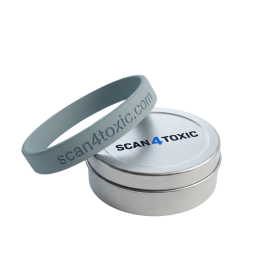
Scan4Health - PTS Wristband Scan4Health - PTS Wristband
This PST (Personal Toxic Sampler) Wristband developed by...
This PST (Personal Toxic Sampler) Wristband developed by Scan4Toxic is made from a highly adsorbent technological material. It effectively captures ambient pollution, and can be worn as a wristband to assess personal exposure to pollution. WARNING: This sampling kit does not include analysis of...
Price €29.00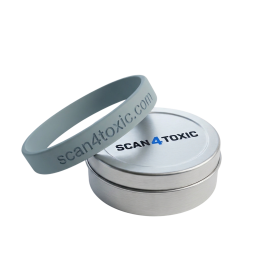

Scan4Health - Endocrine Disruptors - Fertility PTS Scan4Health - Endocrine Disruptors - Fertility PTS
Test kit with PTS Wristband to measure personal exposure to...
Test kit with PTS Wristband to measure personal exposure to the most common endocrine disruptors in our daily environment. The PTS wristband is made of a high-tech material with unique adsorbent properties that will capture the pollution to which you are exposed.
Price €149.00