
How are PAHs analyzed in household dust samples?
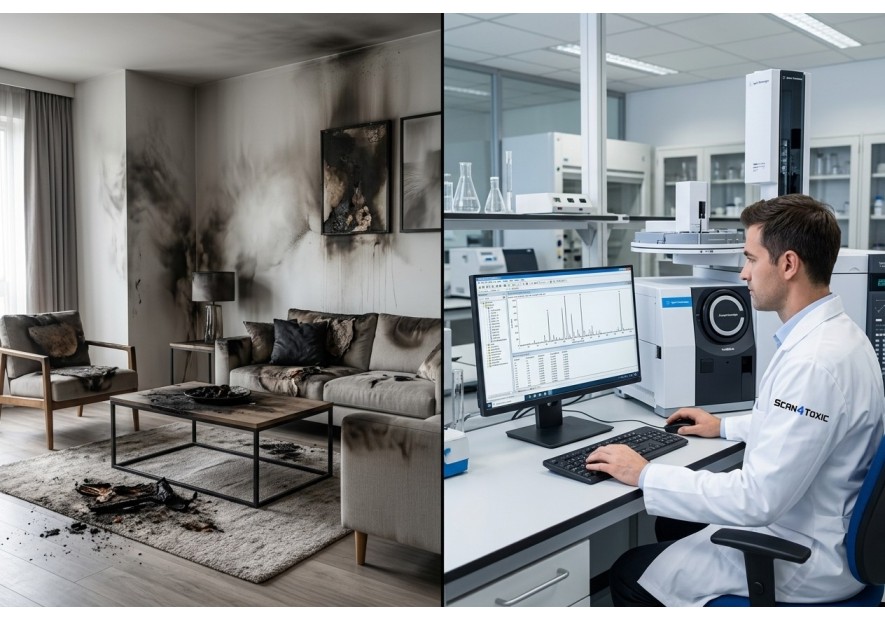
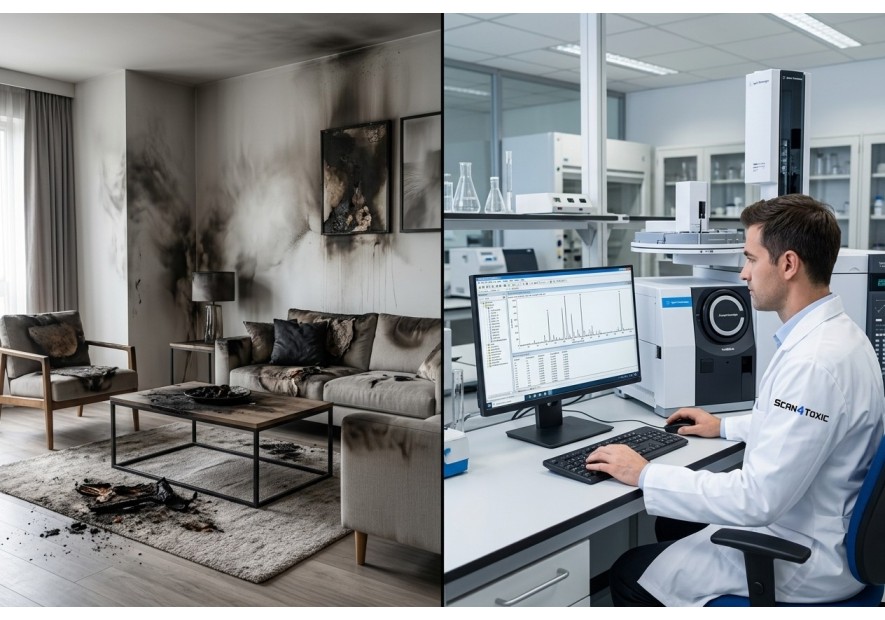
The dust that accumulates on the floor, on our furniture, and in our textiles isn’t just an aesthetic problem—it acts as a veritable sponge for indoor pollution. Among the many invisible pollutants trapped in our homes, polycyclic aromatic hydrocarbons (PAHs) are particularly concerning. After a dramatic event such as a disaster or a nearby fire, conducting a PAH analysis of the deposited residues allows for a precise measurement of the environmental and health exposure of the occupants.
What are PAHs, and why do they accumulate in dust?
Polycyclic Aromatic Hydrocarbons (PAHs) are a family of semi-volatile organic compounds (SVOCs). Unlike highly volatile compounds, which evaporate completely into the air, these semi-volatile molecules have the distinctive property of condensing and attaching themselves to airborne particles, then settling permanently on surfaces in the form of household dust.
PAHs are produced during the incomplete combustion of organic matter (wood, fuels, tobacco, biomass). For this reason, they are naturally present at background levels in the environment, but their concentrations become particularly high and alarming following an industrial fire, a wildfire, or a house fire.
Major PAHs and Their Health Effects
The PAH family includes several dozen molecules. Among the most well-known and closely monitored are:
- Benzo[a]pyrene (classified by the IARC as a known human carcinogen)
- Chrysene and Benzo[a]anthracene
- Fluoranthene, Pyrene, and Phenanthrene
Exposure to PAHs, which occurs through inhalation of resuspended dust or accidental ingestion (particularly among young children who put their hands in their mouths), poses serious risks. These compounds are known for their toxic, mutagenic, endocrine-disrupting, and carcinogenic effects.
Sample Preparation: The Role of the Scan4Dust Collector
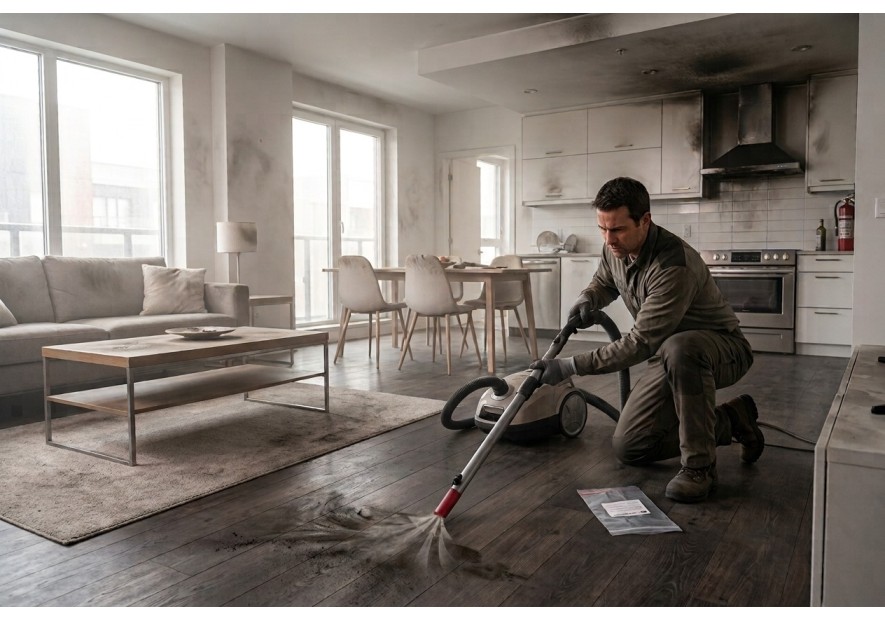
To conduct a PAH analysis, the first step involves collecting a representative sample of environmental deposits. Dust collected in the field using Scan4Dust sampler undergoes rigorous preparation in the laboratory.
Preliminary sieving: The raw samples collected are sieved to retain only the finest fraction of dust. These microparticles are, in fact, the most representative of indoor air pollution, as they remain easily suspended in the air and bind most strongly to toxic substances.
Solvent extraction: The fine powder obtained in this way is subjected to liquid extraction using an organic solvent selected for its strong chemical affinity with SVOCs. This process effectively solubilizes and extracts all of the PAHs trapped in the solid matrix.
Instrumental Analysis by GC-MS: Accuracy and Certainty
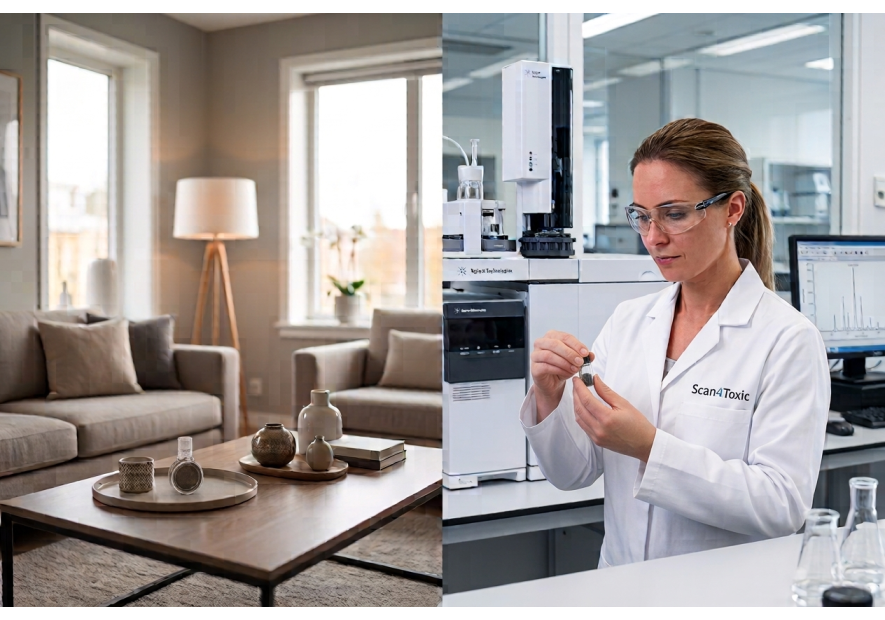
The clarified liquid extract is then injected into a state-of-the-art analytical system: gas chromatography coupled with mass spectrometry (GC-MS).
Chromatographic Separation (GC)
The sample is vaporized and carried through a capillary column. The various PAHs present separate from one another as they travel through the column, based on their molecular weight and physicochemical properties.
Detection and Quantification by Mass Spectrometry (MS)
At the outlet of the chromatographic column, the mass spectrometer comes into play to provide a twofold assurance:
Formal identification: Each PAH has a unique spectral fingerprint that allows the molecule to be identified with certainty, eliminating any risk of error or interference with other pollutants.
Precise quantification: The intensity of the signal obtained is directly proportional to the amount of material present. By comparing the results to titrated reference standards, the laboratory determines the exact concentration, expressed in micrograms per gram of dust (µg/g).
Focus on the 16 PAHs regulated by the U.S. EPA and interpretation of the results
The analysis of PAHs in household dust samples focuses primarily on the list of 16 regulated PAHs established by the U.S. Environmental Protection Agency (US EPA). This list serves as the international benchmark for environmental risk assessment:
List of the 16 PAHs from the U.S. EPA
- Naphthalene
- Acenaphthylene
- Acenaphthene
- Fluorene
- Phenanthrene
- Anthracene
- Fluoranthene
- Pyrene
- Benzo[a]anthracene
- Chrysene
- Benzo[b]fluoranthene
- Benzo[k]fluoranthene
- Benzo[a]pyrene
- Indeno[1,2,3-cd]pyrene
- Dibenzo[a,h]anthracene
- Benzo[g,h,i]perylene
Once the tests are complete, all the data is summarized in a comprehensive expert report. To provide genuine diagnostic value, the measured concentrations are interpreted by comparing them to statistical reference values derived from national surveys and representative of typical residential conditions. This makes it possible to immediately determine whether the residence shows abnormal contamination related to a disaster and to guide the necessary decontamination efforts.
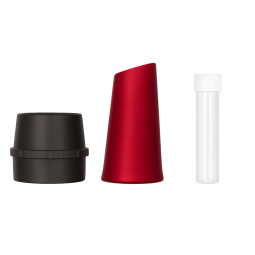
Scan4Dust - Dust Collector Scan4Dust - Dust Collector
The Scan4Toxic sampling kit allows you to collect a dust...
The Scan4Toxic sampling kit allows you to collect a dust sample to assess indoor air quality in your home. Dust contains many toxic chemicals, and analyzing it helps you take steps to protect your health on a daily basis. This sample collection kit does not include analysis of your dust sample....
Price €49.00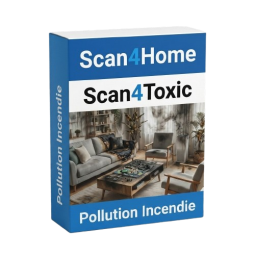

Scan4Home - Fire Pollution Scan4Home - Fire Pollution
This testing kit allows you to measure the level of...
This testing kit allows you to measure the level of carcinogenic combustion residues in your indoor environment following a fire. Your dust sample is analyzed in a laboratory for Polycyclic Aromatic Hydrocarbons (PAHs).
Price €199.00 Regular price €249.00