



What if the prevention of occupational diseases began with an assessment of occupational exposure?
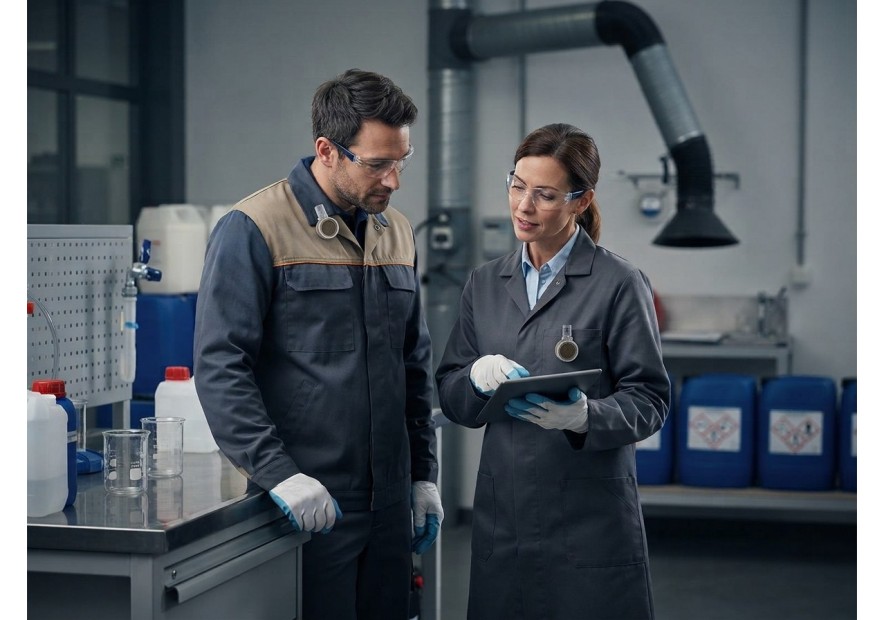
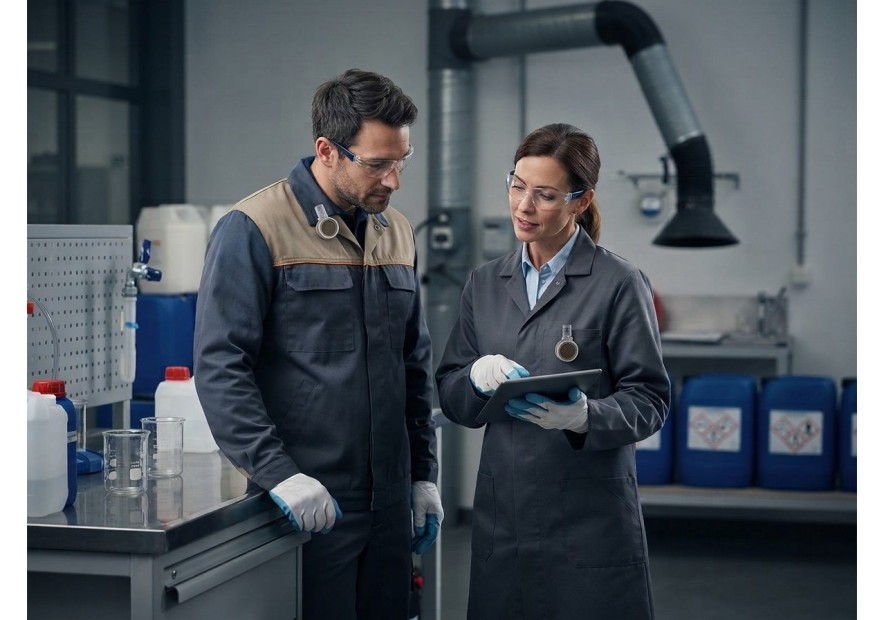
In many workshops, laboratories, and industrial sites, handling chemicals is an integral part of day-to-day operations. Yet behind these routine technical tasks lies a major challenge for public health and economic sustainability: managing chemical risks. Too often approached solely from the perspective of regulatory compliance, worker protection requires a much more pragmatic approach. Given the persistence of work-related illnesses—such as occupational cancers, chronic respiratory conditions, neurological disorders, and skin conditions—a paradigm shift is needed. What if the true prevention of occupational diseases began with a rigorous and regular on-site assessment of occupational exposure?
Understanding the Invisible Mechanisms of Chemical Risk
Unlike mechanical or electrical hazards, which pose an immediate and obvious danger, exposure to chemical agents has an insidious effect. Whether it involves volatile solvents, wood dust, welding fumes, or substances classified as CMR (carcinogens, mutagens, and reprotoxic substances), the human body undergoes gradual accumulation of these substances. The absence of a distinct odor or immediate irritation does not in any way mean that the work environment is safe. Many toxic substances cross the lung or skin barrier at concentrations imperceptible to the human senses, causing irreversible cellular damage that may not manifest until ten, twenty, or thirty years later. For both operators and QHSE managers, relying solely on on-site observations is therefore a major error in judgment.
The Limitations of the Theoretical Approach When Confronted with the Reality of the Workplace
Labor Code regulations require all employers to document chemical hazards in the Single Occupational Risk Assessment Document. However, a purely theoretical analysis—based solely on reviewing Safety Data Sheets (SDS) and the volumes of products purchased—quickly reaches its limits. Actual conditions of use significantly alter the level of hazard: workshop temperature, the age of source-capture systems, specific operator actions, the opening of containers, or even simultaneous exposure to multiple substances. Only an occupational exposure assessment conducted through objective air sampling as close as possible to workers’ breathing zones can quantify actual exposure and compare it to Occupational Exposure Limits (OELs).
Turning Regulatory Requirements into a Tool for Operational Prevention
For business leaders, accredited regulatory sampling campaigns are often perceived as burdensome, complex to organize, and financially onerous, which all too often leads to the postponement of inspections. However, waiting for a labor inspection or a warning from occupational health services before taking action exposes the company to significant legal risk, particularly that of gross negligence. Incorporating a regular, indicative assessment of occupational exposure into its QHSE routine allows the company to regain control. By precisely identifying the tasks that generate the highest levels of emissions—such as decanting, degreasing, or cleaning equipment—the company can target its investments: optimizing local ventilation, substituting a hazardous solvent, modifying a work procedure, or adjusting Personal Protective Equipment (PPE).
Scan4Work Solutions: Making Measurement Accessible to Everyone for Long-Term Protection
Scan4Toxic developed the Scan4Work line specifically to overcome the technical and financial barriers associated with pollutant measurement. These professional indoor air analysis kits enable a reliable, rapid, and cost-effective initial assessment without interrupting production. Designed to be deployed independently by safety managers or the operators themselves, the passive sensors are attached directly to work clothing or mounted in a fixed location. After being analyzed by a specialized laboratory, they provide accurate results on concentrations of VOCs, toluene, formaldehyde, or CMR agents. This pragmatic approach to assessing occupational exposure offers an objective snapshot of the air being breathed, making it possible to validate the effectiveness of collective protective measures and to raise awareness among teams through concrete data.
The prevention of occupational diseases cannot be based on guesswork. By placing the assessment of occupational exposure at the heart of their safety strategy, companies shift from a reactive approach to risk management to a proactive and measurable approach to protection. Measuring the invisible means equipping oneself with the technical means to address issues at the source, ensure regulatory compliance of facilities, and, above all, sustainably preserve the health of every employee.
Scan4Work - Benzene Scan4Work - Benzene
Complete testing kit for measuring air quality in workplaces...
Complete testing kit for measuring air quality in workplaces and occupational exposure to benzene (CAS 71-43-2), classified as carcinogenic and mutagenic. Exposure to benzene can cause occupational diseases.
Price €99.00
Scan4Work - Formaldehyde Scan4Work - Formaldehyde
Complete testing kit for measuring workplace air quality and...
Complete testing kit for measuring workplace air quality and occupational exposure to formaldehyde (CAS 71-43-2), which is classified as a carcinogen. Exposure to formaldehyde can cause occupational diseases.
Price €99.00

Scan4Air Kit - VOC Screening Scan4Air Kit - VOC Screening
Complete analysis kit for measuring air quality in workplaces...
Complete analysis kit for measuring air quality in workplaces and occupational exposure to VOCs. Exposure to VOCs can cause occupational diseases.
Price €499.00