




PTS Silicone Wristband and Exposure to Neurotoxins: Understanding, Detecting, and Targeting Pollutants in the Nervous System

Our central and peripheral nervous systems act as the body’s conductor: they regulate motor function, memory, attention, mood, and vital functions. Yet this exquisitely delicate system remains vulnerable to a multitude of chemical compounds present in our everyday environment. In the face of this silent threat, the approach combining the PTS silicone wristband with exposure to neurotoxins offers a practical way to measure individual exposure levels and trace them back to their sources.
What are neurotoxic substances, and what are their effects on health?
A neurotoxin is a chemical, physical, or biological agent capable of altering the structure or normal functioning of the nervous system. These molecules can act at various levels: by disrupting synaptic transmission, inhibiting essential enzymes such as acetylcholinesterase, causing oxidative stress or neuroinflammation, or damaging myelin sheaths and neuronal membranes.
Clinical manifestations depend on the nature of the compound, the dose received, the duration of exposure, and the individual’s biological susceptibility. Acute exposure to high doses can cause headaches, dizziness, nausea, visual disturbances, paresthesias, or seizures. Conversely, chronic exposure to low doses, which is most common in the general population, has insidious effects. It can result in persistent fatigue, sleep disturbances, difficulty concentrating, decreased cognitive performance, or behavioral changes.
Links Between ADHD and Neurodegenerative Diseases
Research in environmental epidemiology and toxicology highlights several areas of concern regarding neurotoxic exposures:
Hyperactivity and ADHD (Attention-Deficit/Hyperactivity Disorder): The developing brain (in utero and during early childhood) exhibits increased permeability and detoxification mechanisms that are still immature. Several observational studies link prenatal or early childhood exposure to certain environmental neurotoxins to an increased risk of ADHD-like symptoms, impulsivity, and executive function impairments.
Parkinson's disease: This condition is characterized by the progressive degeneration of dopaminergic neurons in the substantia nigra. Chronic exposure to certain neurotoxic pesticides and solvents is recognized as a major environmental risk factor, often in combination with genetic susceptibility.
Alzheimer's Disease and Other Forms of Dementia: Although age and genetics play a central role, chronic oxidative stress, neuroinflammation, and the accumulation of cellular damage caused by certain environmental pollutants are the subject of intensive research as cofactors that may accelerate or exacerbate cognitive decline.
The organophosphate family: insecticides and flame retardants
Among the chemical families most extensively studied for their neurotoxicity, organophosphorus compounds play a central role. Their common chemical feature is the presence of a phosphorus atom bonded to organic groups, but their industrial uses fall into two broad and very distinct subfamilies.
Organophosphate insecticides
Historically developed for agriculture, forestry, and vector control, these insecticides were designed to act on the nervous system of insects, specifically by inhibiting acetylcholinesterase, a key enzyme that breaks down acetylcholine at the synapses. Since this action is not strictly selective for insects, it can affect the human nervous system.
Among the best-known substances in this subfamily are:
Chlorpyrifos (and chlorpyrifos-methyl), which is widely used in agriculture and is now heavily restricted or banned in many countries due to its developmental neurotoxicity.
Diazinon, used for crop treatment and to control certain pests.
Malathion, used in agriculture as well as in certain pest control treatments.
Phosalone or fenthion, used in arboriculture and for controlling certain insect vectors, respectively.
Organophosphorus flame retardants (OPFRs)
In response to the gradual phase-out of certain brominated flame retardants (such as PBDEs), the industry has turned extensively to organophosphorus flame retardants (OPFRs). Their role is to slow or prevent the spread of fire in combustible materials.
The main substances in this subfamily include:
TDCiPP (tris(1,3-dichloro-2-propyl) phosphate), which is frequently used in polyurethane foams.
TCiPP (tris(chloropropyl) phosphate), found in rigid and flexible foams used for insulation or in furniture.
TCEP (tris(2-chloroethyl) phosphate), used in certain polymers, textiles, and coatings.
TPhP (triphenyl phosphate), used both as a flame retardant and a plasticizer, particularly in electronic equipment and certain consumer products.
What are our main sources of chronic exposure to these pollutants?
Chronic exposure to organophosphates results from a combination of household, dietary, and occupational sources:
The indoor environment: RFOPs continuously migrate from sofas, mattresses, carpets, curtains, and electronic device casings and settle in household dust and the ambient air. Young children, who crawl on the floor and frequently put their hands in their mouths, are particularly at risk.
Food: Residues of organophosphate insecticides may remain on certain fruits, vegetables, or grains that have not been washed or treated before harvest, while some organophosphate insecticides may migrate from materials that come into contact with food or from ambient dust during meal preparation.
Workplace and specific activities: Farmers, farmworkers, pesticide applicators, cleaning staff, and employees in logistics or in the furniture and electronics manufacturing industries are often exposed to higher levels than the general population.
Transportation: The interiors of cars, trains, and airplanes contain materials treated with flame retardants and dust rich in organophosphates.
The Value of the PTS Silicone Wristband in Assessing Exposure to Neurotoxins
Assessing actual exposure to organophosphorus compounds is a major challenge. Many of these molecules are rapidly metabolized and excreted in the urine (sometimes within a few hours), which makes one-time biological samples susceptible to day-to-day variations and of limited value in identifying external sources.
This is precisely where the PTS silicone wristband approach and exposure to neurotoxins come into play. Made of polydimethylsiloxane (PDMS), the PTS wristband acts as a passive biomimetic sensor: its lipophilic matrix mimics the lipid layer of human skin and continuously captures semi-volatile organic compounds (SVOCs) present in the air and on surfaces in contact with the wrist.
When worn daily for several consecutive days, the PTS silicone wristband offers several key benefits:
Long-Term Integration: It smooths out day-to-day fluctuations and reflects the cumulative exposure over the entire period of use.
A simple, non-invasive approach: No blood draws or heavy equipment are required while the device is being worn, which makes it easier for users—including vulnerable populations—to adhere to the treatment.
High-precision, targeted chemical analysis: After solvent extraction, gas chromatography coupled with mass spectrometry (GC-MS) enables the identification and precise quantification of numerous semi-volatile organic compounds, including a wide range of organophosphorus flame retardants and certain insecticides.
Concrete identification of sources: When combined with a detailed questionnaire (lifestyle habits, type of housing, recent furniture purchases, occupation, travel habits), the chemical profile recorded on the wristband helps distinguish between exposure related to the home, the office, or transportation, thereby guiding targeted mitigation efforts.
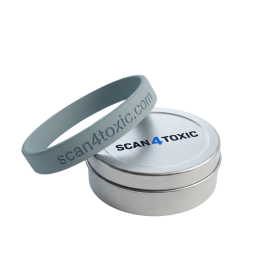
Scan4Health - PTS Wristband Scan4Health - PTS Wristband
This PST (Personal Toxic Sampler) Wristband developed by...
This PST (Personal Toxic Sampler) Wristband developed by Scan4Toxic is made from a highly adsorbent technological material. It effectively captures ambient pollution, and can be worn as a wristband to assess personal exposure to pollution. WARNING: This sampling kit does not include analysis of...
Price €29.00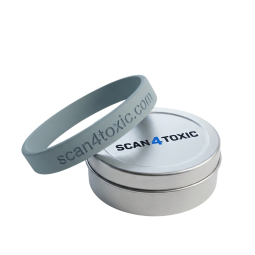

Scan4Health - Neurotoxins PTS Scan4Health - Neurotoxins PTS
Test kit with a PTS wristband to measure your personal...
Test kit with a PTS wristband to measure your personal exposure to the most common neurotoxic substances in our everyday environment. The PTS wristband is made of a high-tech material with unique adsorbent properties that capture the pollution you are exposed to.
Price €199.00