


Post-fire contamination: How can experts and policyholders verify that a property has been safely restored?
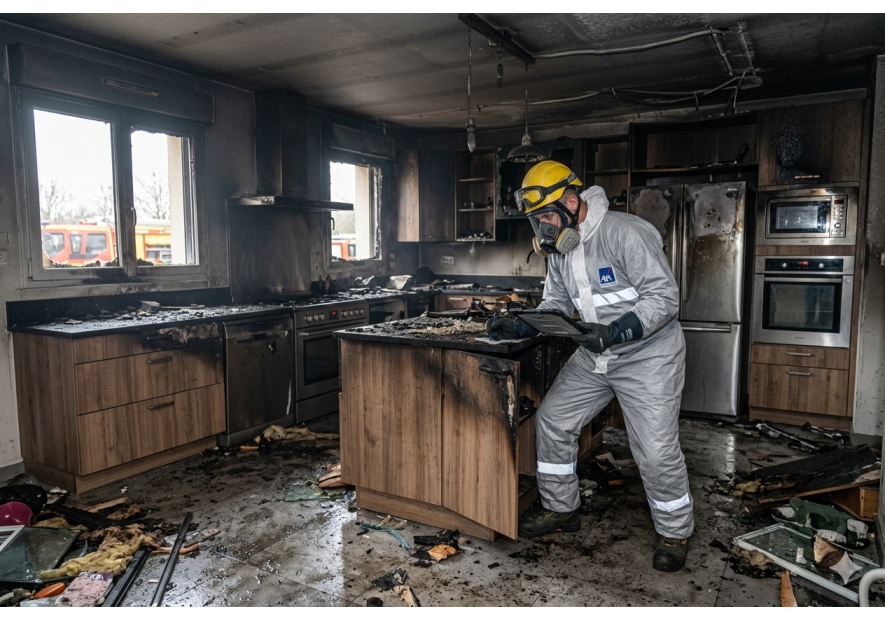
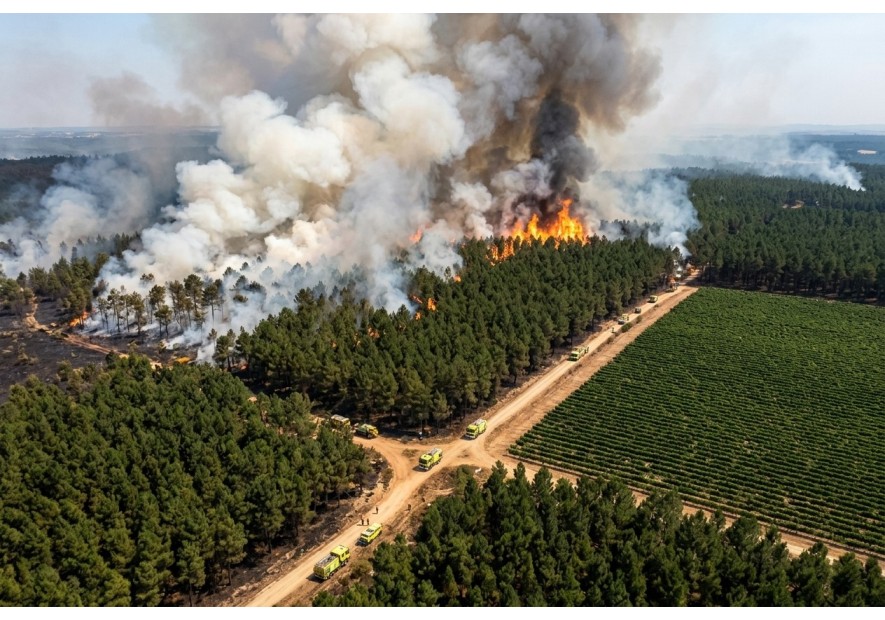
When a fire breaks out, attention naturally focuses on the flames and visible structural damage. However, once the fire is under control, an invisible and persistent threat takes hold within the building: post-fire contamination. For insurance experts, claims adjusters, and policyholders, the issue of “cleanliness” can no longer be limited to a simple visual inspection. Certifying that the premises are once again habitable without posing a health risk requires a rigorous scientific approach, based on the detection of residual chemical pollutants, particularly Polycyclic Aromatic Hydrocarbons (PAHs).
The Health Challenge: Why Is Decontamination Necessary?
A fire is a complex chemical reaction that releases thousands of toxic substances. When modern materials (plastics, insulation, electronic devices) burn, they produce soot laden with highly hazardous compounds. Post-fire contamination is primarily characterized by the presence of PAHs, combustion residues whose toxicity is now well documented.
The World Health Organization (WHO) and the International Agency for Research on Cancer (IARC) classify most of these substances as carcinogenic, mutagenic, or toxic to reproduction. These pollutants do not disappear simply by ventilating a room; they settle on all surfaces, seep into the most inaccessible corners, and can be released back into the air or absorbed through skin contact months after the disaster. For the expert, confirming the need for thorough decontamination is not an option; it is a measure to protect civil liability and the health of the occupants.
The expert's role: To validate and justify the interventions
For the insurance expert, the challenge lies in justifying the costs of restoration. How does one decide between a simple cleanup and a thorough technical decontamination? The answer lies in measuring the extent of contamination following a fire.
By using protocols for collecting soot samples from surfaces, the expert has objective data to:
> Document the extent of the damage
To demonstrate that chemical contamination has spread to areas not affected by the fire.
> Approve quotes from service providers
Justify the use of specific decontamination techniques (encapsulation, scrubbing, dry ice cleaning).
> Certify final compliance
Provide concrete evidence that toxicity levels have returned to "zero" or an acceptable level following the intervention.
The lack of scientific testing may lead to future disputes if occupants report health problems or if "burning" odors (indicative of VOCs and PAHs) persist after construction is complete.
Reassuring policyholders and residents: The power of data
For an insured person, returning to their home or business premises after a fire is a traumatic experience. Concerns about contamination following a fire and its long-term effects on children or employees are legitimate. A home that "appears" clean may still be saturated with invisible fine particles.
Using the Scan4Work HAP Surface kit eliminates this uncertainty. By comparing results before and after treatment, the decontamination professional can provide a laboratory report certifying the effectiveness of their work. This transparency is the most powerful tool for reassuring occupants. Knowing that countertops, floors, and walls have been tested and declared safe by an independent laboratory transforms a major concern into a certainty of safety.
The Scan4Toxic Methodology: A Two-Step Protocol
Certification of reduced contamination following a fire is based on a rigorous swab sampling protocol:
The initial sample
It serves as a diagnostic tool. It identifies the chemical signature of the fire and the extent of contamination on surfaces. It demonstrates the need for action.
The control sample
Performed after cleaning, it confirms that the decontamination protocols were effective.
These samples are then analyzed in a laboratory using chromatography, providing molecular-level precision. This method eliminates any subjectivity: post-fire contamination is treated with the same rigor as asbestos removal or lead abatement.
Toward a New Standard in Refurbishment
Fire damage assessment is evolving. Experts and policyholders now have access to powerful tools that eliminate uncertainty. Using Scan4Toxic kits ensures that restoration is thorough, compensation is fair, and, above all, the health of occupants is protected. By standardizing post-fire contamination testing, industry professionals strengthen their expertise and credibility while ensuring a healthy environment for the future.

Scan4Dust - HAP Lingette Scan4Dust - HAP Lingette
Complete test kit to assess the effectiveness of post-fire...
Complete test kit to assess the effectiveness of post-fire decontamination. Provides accurate and reliable measurements of PAH (polycyclic aromatic hydrocarbons) combustion residues, which are classified as carcinogens.
Price €199.00