

0
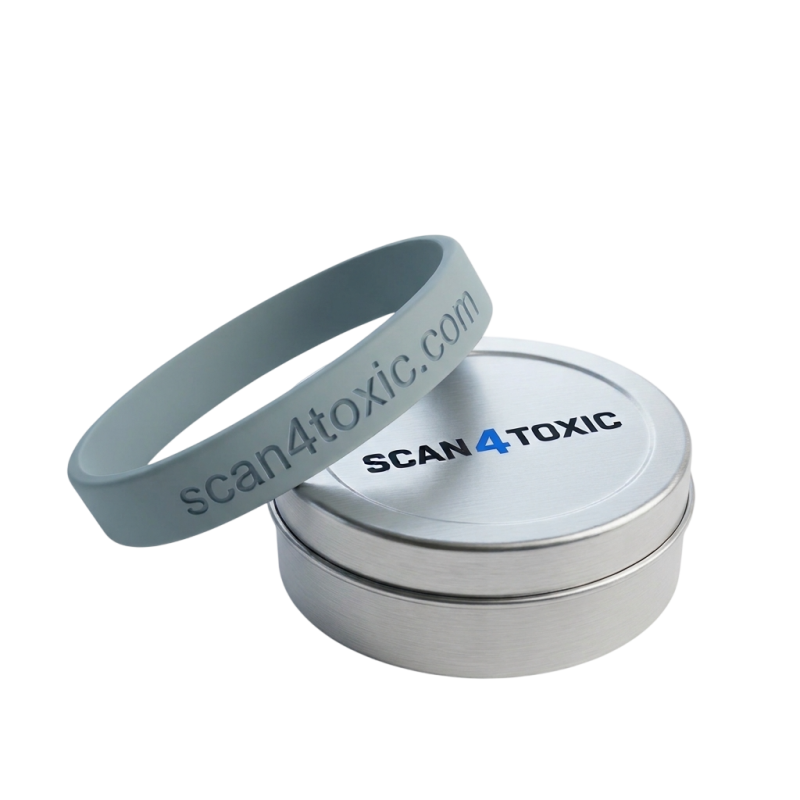
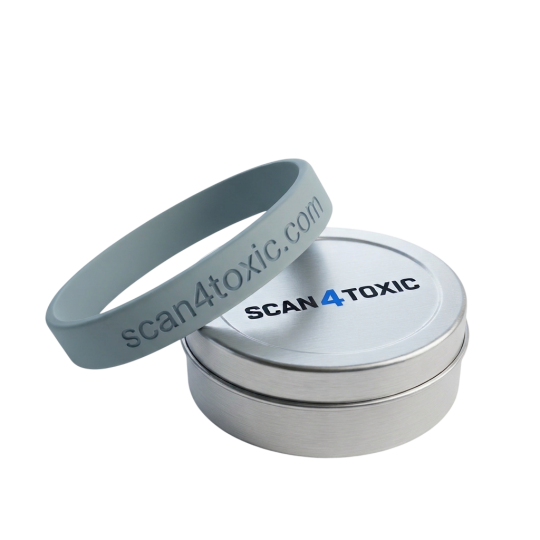
Test kit with a PTS wristband to measure your personal exposure to the most common neurotoxic substances in our everyday environment.
The PTS wristband is made of a high-tech material with unique adsorbent properties that capture the pollution you are exposed to.
Nerve signals are essential for the functioning of our body. Neurotoxic substances disrupt the functioning of the central and peripheral nervous systems.
Your PTS (Personal Toxic Sampler) wristband is made of a material that very effectively adsorbs chemicals. When worn as a wristband, it captures environmental pollutants, and laboratory analysis will allow you to identify the toxic substances to which you are exposed in your daily life.
Your PTS wristband must be worn continuously, 24 hours a day for 7 days, to accurately reflect your environment under your normal daily conditions: while showering, exercising, going out, working, etc. It is essential that you go about your daily life as usual during this period.
Substances with neurotoxic effects are derived from chemical weapons (Sarin, Soman, VX, Novichok, etc.) and belong to the organophosphate chemical family. These are primarily insecticidal pesticides and flame-retardant additives.
Their mechanism of action involves inhibiting an enzyme called cholinesterase. This enzyme is responsible for stopping the action of a neurotransmitter (acetylcholine). Without this enzyme, the neurotransmitter remains bound to the cholinergic receptor, and the transmission of the nerve signal continues.
Neurotoxic substances affect the transmission of nerve signals. Several scientific studies have identified exposure to organophosphates as a risk factor for Parkinson's disease.
People with Alzheimer's and Parkinson's disease are particularly vulnerable to exposure to neurotoxic substances.
The laboratory analysis focuses on a selection of chemicals recognized as neurotoxins in the scientific literature.
The complete list of neurotoxic substances tested for in your PTS bracelet is available in the "Neurotoxins List" tab
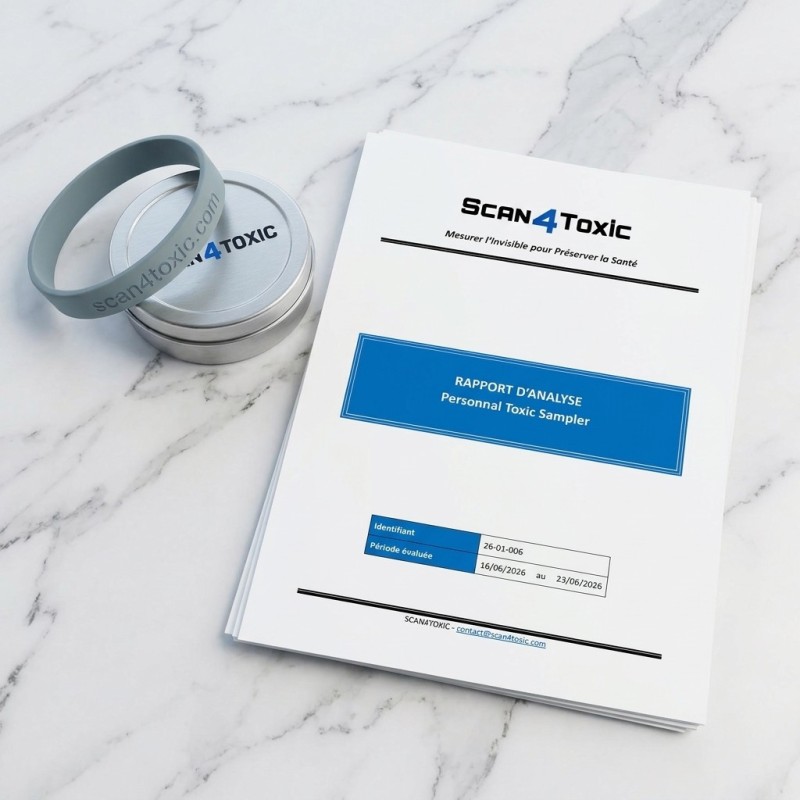
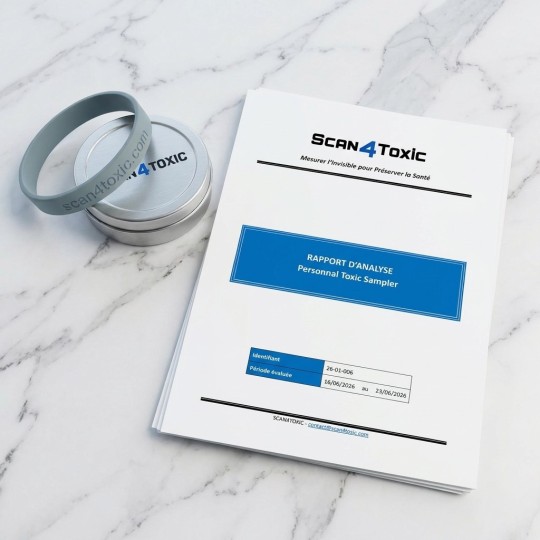
It typically takes 10 to 15 business days from the date the laboratory receives your PTS wristband to receive your test report. Your report will be emailed to the address listed on the sample collection form.
Your analysis report contains a list of all the neurotoxic substances identified during the analysis of your PTS wristband, along with exposure level indicators and information on their toxicity. Additional information on the main sources of neurotoxic substances and ways to reduce exposure to them is available in an online guide.
Test kit with PTS Wristband to measure personal exposure to...
Test kit with PTS Wristband to measure personal exposure to the most common endocrine disruptors in our daily environment. The PTS wristband is made of a high-tech material with unique adsorbent properties that will capture the pollution to which you are exposed.
Price €149.00Test kit with a PTS wristband to measure your personal...
Test kit with a PTS wristband to measure your personal exposure to the most common pesticides (insecticides, herbicides, fungicides) found in our everyday environment. The PTS bracelet is made of a high-tech material with unique adsorbent properties that capture the pollution you are exposed to.
Price €299.00