


Find Out About VOC Pollution in Your Indoor Air
On average, we spend 80% of our time indoors: at home, at the office, at school, or on public transportation. Yet an alarming reality has come to light: indoor air is often 5 to 10 times more polluted than outdoor air. While outdoor air is subject to general atmospheric pollution, our homes contain a multitude of specific pollutants continuously emitted by our activities, our equipment, and our building materials. Among these invisible yet ubiquitous substances, Volatile Organic Compounds (VOCs) pose the most insidious threat to occupants’ health, with some—such as benzene and formaldehyde—being directly classified as known carcinogens.
What are VOCs, and what are their main categories?
Volatile Organic Compounds (VOCs) are a broad family of chemicals that easily evaporate at room temperature and disperse into the air we breathe. They come from paints, varnishes, new particleboard furniture, household products, air fresheners, and even heating systems.
To better understand this indoor air pollution, it is important to distinguish between the main groups of VOCs frequently measured in our homes:
- Aliphatic hydrocarbons: derived primarily from petroleum products, heating fuels (kerosene stoves), and solvents.
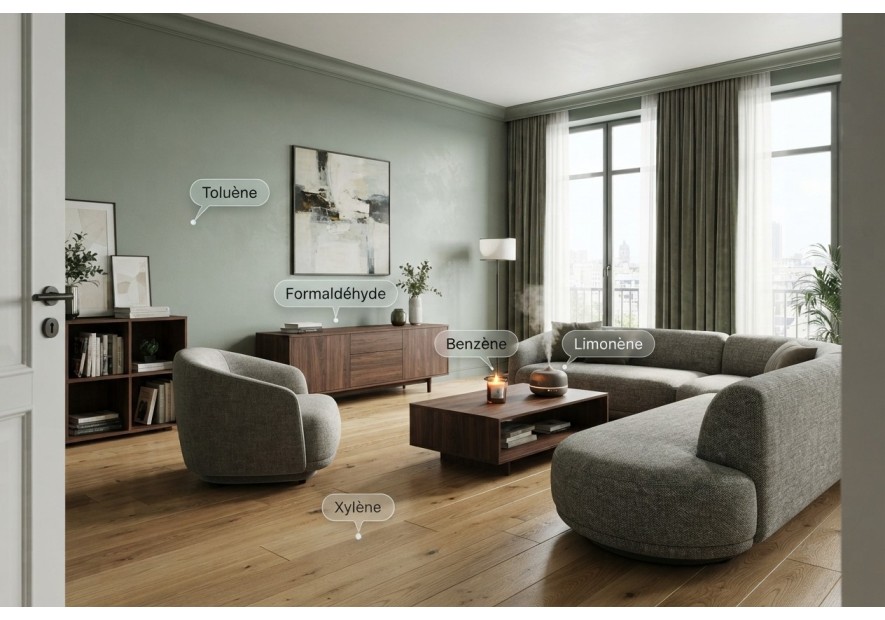
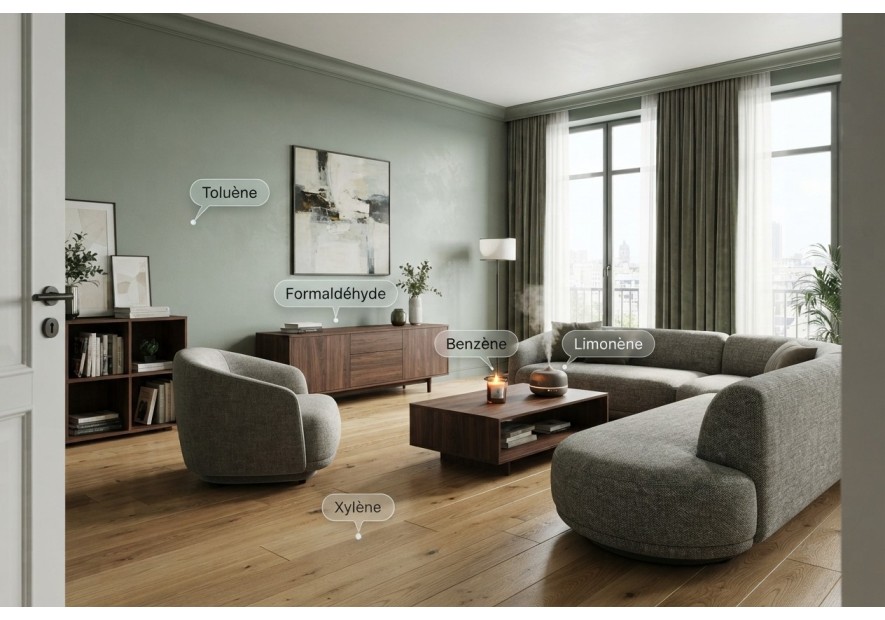
- Aromatic hydrocarbons (e.g., benzene, toluene, xylene): found in cigarette smoke, exhaust fumes seeping in from garages or roadways, as well as in certain adhesives and resins. Benzene is particularly feared for its hematological toxicity and carcinogenicity (leukemia).
- Chlorinated solvents (e.g., perchloroethylene, trichloroethylene): emitted by dry-cleaning products, degreasers, and certain household stain removers.
- Terpenes (e.g., alpha-pinene, limonene): Naturally present in wood, they are also widely used as fragrance additives in cleaning products with “pine” or “lemon” scents, as well as in essential oils. Although they are of natural origin, they can be highly irritating and form new secondary pollutants when they react with ozone.
- Aldehydes (e.g., formaldehyde, acetaldehyde): Formaldehyde is one of the most dangerous and widespread indoor pollutants. Released in large quantities from adhesives in particleboard furniture, laminate flooring, upholstery fabrics, and resins, it is classified as a human carcinogen by the IARC and causes severe respiratory irritation.
- Ketones (e.g., acetone): found in nail polish removers, paint strippers, varnishes, and certain adhesives.
Assess the condition of your home with Scan4Home test kits
Given the wide variety of pollutants—some of which are odorless or masked by artificial fragrances—it is impossible to assess the quality of one’s home environment with the naked eye. Using Scan4Home testing kits is currently the most reliable and accurate way to conduct a comprehensive assessment of indoor air pollution in one’s home.
How do Scan4Home testing kits work?
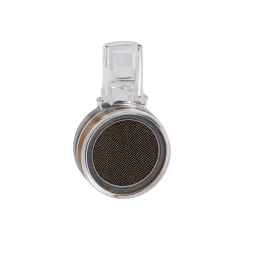
Passive sampler: You will receive a discreet air sampler that you simply place in the room to be tested for a period of 7 days. The sensors naturally trap VOCs present in the ambient air.
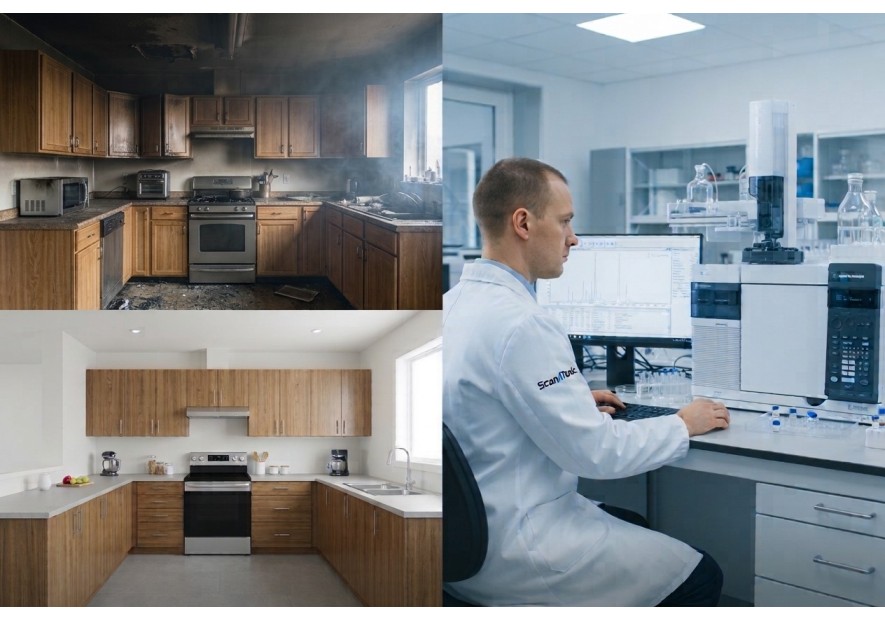
State-of-the-art laboratory analysis: Once the sample has been collected, you return the sampler to the specialized laboratory. There, the sample is analyzed using chromatography, ensuring absolute scientific rigor.
A comprehensive and informative report: You’ll receive a detailed assessment that precisely lists each family of VOCs identified and their concentrations. The report does more than just quantify pollution—it identifies the likely main sources in your home and provides personalized advice on how to eliminate pollutants and purify your indoor environment.
Which room should be analyzed first?
To obtain results that accurately reflect the actual health risks in your home, it is essential to focus on the rooms where you and your family spend the most time:
Bedrooms: We spend between 6 and 8 hours a night there, breathing continuously. The presence of VOCs (especially in a child’s or baby’s room furnished with new furniture) can disrupt sleep and trigger allergies or asthma attacks.
Main living areas (living room, family room): As the quintessential gathering places, these spaces contain a large number of sources of emissions (sofas, televisions, household products, candles, rugs, and paint).
Assessing and controlling indoor air pollution caused by VOCs is a key step in maintaining your health on a daily basis and providing a healthy environment for your entire family.
Scan4Home - VOC Scan4Home - VOC
Comprehensive testing kit to measure Volatile Organic...
Comprehensive testing kit to measure Volatile Organic Compounds (VOCs) in indoor air of homes or offices and to assess the indoor air quality. Measures over 30 VOCs. Indoor air contains many toxic chemicals, and testing it allows you to take steps to protect your health on a daily basis.
Price €199.00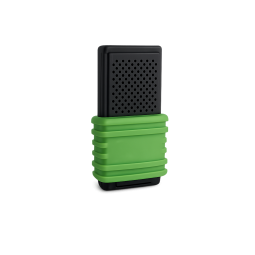
Scan4Home - Aldehydes Scan4Home - Aldehydes
Complete Indoor Air test kit to measure aldehydes and ketones...
Complete Indoor Air test kit to measure aldehydes and ketones in in indoor air of homes or offices and to assess the indoor air quality. Measures over 10 aldehydes and ketones. Indoor air contains many toxic chemicals, and testing it allows you to take steps to protect your health on a daily basis.
Price €199.00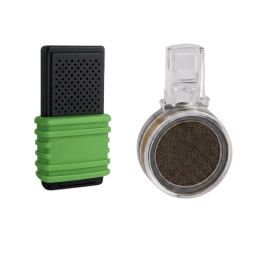

Scan4Home - Indoor Air Scan4Home - Indoor Air
Complete test kit to measure Volatile Organic Compounds (VOCs)...
Complete test kit to measure Volatile Organic Compounds (VOCs) and aldehydes in indoor air in homes and offices. Measures over 60 VOCs and aldehydes. Indoor air contains many toxic chemicals, and testing it allows you to take steps to protect your health on a daily basis.
Price €299.00