


Fire at a Seveso site in Moselle: Toxic fallout, risks to nearby residents, and contamination of homes
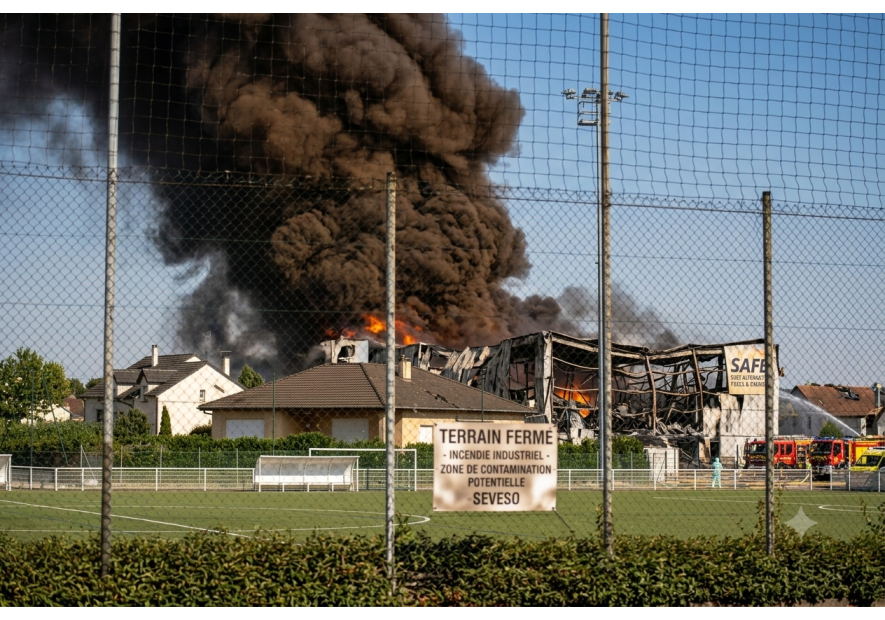
Sunday, August 2, 2026, will remain a particularly memorable day for the residents of the Orne Valley. A major incident occurred at the Safe (Suez Alternative Fuels & Energy) facility, located in the industrial zone of the town of Gandrange. The fire at a Seveso-designated site in Moselle caused great concern among the local population and prompted a massive mobilization of emergency services and law enforcement. An 800-square-meter warehouse, a central component of the industrial facility, was completely destroyed by the fire within a few hours.
Faced with an impressive plume of thick, black smoke spreading rapidly into the atmosphere, prefectural authorities reacted immediately to ensure public safety. A temporary lockdown order was issued for nearly 30,000 residents across five neighboring municipalities: Gandrange, Amnéville, Clouange, Vitry-sur-Orne, and Rombas. For several hours, residents had to stay indoors, close their doors and windows, and turn off ventilation systems to avoid any direct exposure to harmful fumes.
Although the evacuation order was lifted after firefighters brought the blaze under control, the medium- and long-term health and environmental consequences remain a major concern.
Uncertainty Regarding Chemicals and the Nature of Dispersed Pollutants
A Seveso site is an industrial facility that handles, manufactures, or stores hazardous substances (flammable, toxic, explosive, or polluting) in quantities sufficient to pose a risk of a major accident to the public and the environment. These sites are subject to strict European regulations requiring enhanced monitoring and specific prevention plans.
One of the main challenges posed by this fire at a Seveso site in Moselle is the initial lack of clarity regarding the exact contents of the destroyed building. It was not immediately clear what was inside the 800-square-meter warehouse when the fire broke out. Due to this uncertainty, it remains difficult to compile a comprehensive list of all the chemical compounds that vaporized and dispersed into the ambient air as a result of the high temperatures.
However, the chemistry of combustion and lessons learned from major industrial fires make it possible to identify the predominant health risks. During the incomplete combustion of complex organic materials, solvents, synthetic polymers, or industrial fuels, significant quantities of polycyclic aromatic hydrocarbons (PAHs) are released into the atmosphere.
PAHs are a family of persistent organic pollutants known for their high toxicity. Many of them, such as benzo[a]pyrene, are classified by international health organizations as known or probable human carcinogens. Carried by warm air, these toxic compounds bind to fine soot particles and gradually settle on the ground, rooftops, vegetation, and homes located within the smoke’s dispersion radius.
Water, Vegetable Gardens, and Animals: Essential Precautions for Local Residents
The spread of soot and fine particles resulting from the incident requires residents of the affected areas to exercise increased caution in their daily lives. The fallout from the fire at a Seveso site in Moselle necessitates adherence to strict safety guidelines regarding local resources.
Water Contamination
Rainwater stored in outdoor tanks and collection systems is particularly vulnerable. Since runoff carries debris from rooftops, this water must under no circumstances be used to water crops, clean outdoor surfaces, or provide drinking water for animals.
Fruit and Vegetable Consumption
Vegetable gardens located in Gandrange, Amnéville, Clouange, Vitry-sur-Orne, and Rombas may have been exposed to significant deposits of PAH-laden particles. Broad-leaf vegetables (lettuce, spinach, cabbage), which are particularly prone to accumulating soot, pose a high risk of contamination. It is strongly recommended that leafy vegetables directly exposed to smoke not be consumed. For fruits and vegetables with smooth or hard skins, thorough washing followed by careful peeling is essential before consumption.
Staying Vigilant for Pets
Pets (dogs, cats) and outdoor farm animals (chickens, rabbits) are at risk of ingesting toxic substances by licking their fur or feathers soiled with soot particles, or by eating contaminated grass. You should wipe their paws and fur after each time they go outside and avoid letting them roam in areas most affected by soot deposits.
Persistant contamination of indoor air and homes
Although the temporary lockdown helped limit acute exposure for nearby residents at the height of the crisis, a building’s airtightness is never absolute. Outside air heavily laden with combustion fumes inevitably seeped into homes located in the path of the plume, whether through air vents, ventilation ducts, or micro-cracks in the building structure.
It is now certain that the homes affected by the smoke have suffered internal contamination. PAHs and toxic microparticles tend to settle and adhere permanently to interior surfaces:
- Home textiles (curtains, rugs, sofas, bedding, and clothing)
- Floors, hardwood floors, and carpets
- Walls, furniture, and ventilation systems (mechanical ventilation, air conditioning)
These carcinogens do not disappear simply through air circulation. Without precise measurement and appropriate decontamination, they can continue to be resuspended into the indoor air as occupants move about, leading to insidious indoor pollution and chronic exposure through inhalation or skin contact.
Test for pollution in your home with the Scan4Toxic testing kit
Following a fire at a Seveso site in Moselle, determining the actual level of contamination in one’s living environment becomes a top priority for protecting one’s health and that of one’s loved ones. It is strongly recommended that a thorough assessment be conducted to determine the level of pollution from these toxic substances inside the affected homes.
To meet this need for transparency and safety, using the Scan4Toxic analysis kit is a simple, thorough, and accessible approach.
The Scan4Toxic Analysis Kit
Extremely easy to use: The Scan4Toxic kit is designed to be easily used by individuals without requiring any prior scientific or technical knowledge. All the equipment needed to collect dust samples yourself using the Scan4Dust collector included in the kit, along with a clear instruction guide.
Laboratory analysis conducted by experts: Once samples are collected from your home, they are sent directly to our specialized laboratories. Experts in environmental toxicology and analytical chemistry conduct tests to accurately quantify residual toxins, including carcinogenic PAHs.
Reliable and clear results: You’ll receive a comprehensive, interpreted analysis report that clearly indicates the level of contamination in your indoor environment. These results will help you determine whether thorough cleaning or professional decontamination is necessary to sanitize your home.
When faced with invisible but persistent pollutants deposited by wildfire smoke, using the Scan4Toxic analysis kit ensures a reliable scientific assessment to restore clean air and a safe living environment.

Scan4Home - Fire Pollution Scan4Home - Fire Pollution
This testing kit allows you to measure the level of...
This testing kit allows you to measure the level of carcinogenic combustion residues in your indoor environment following a fire. Your dust sample is analyzed in a laboratory for Polycyclic Aromatic Hydrocarbons (PAHs).
Price €199.00 Regular price €249.00