
How do you collect an indoor air sample?
The quality of the air we breathe every day in our homes, offices, and schools has become a major public health concern. We spend more than 80% of our time indoors, where pollutants can sometimes accumulate at concentrations far higher than those found outdoors. To identify risks and improve the quality of our daily environment, knowing how to properly collect indoor air samples is the first step toward effective prevention.
Why is indoor air quality so important for health?
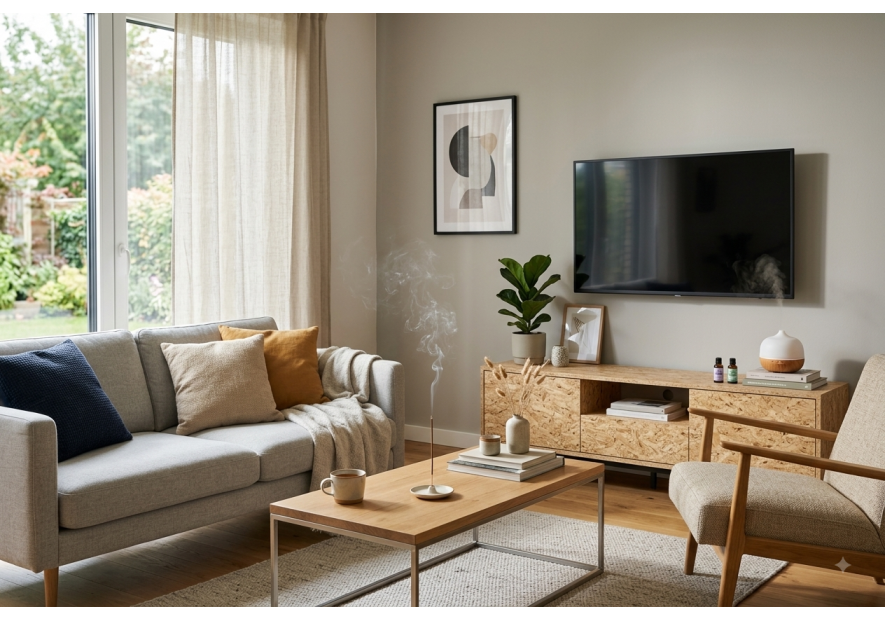
The air in our indoor spaces contains an invisible mix of pollutants from various sources: household products, paint, new furniture, building materials, heating systems, and everyday activities (cooking, DIY projects, candles).
Among these substances, Volatile Organic Compounds (VOCs) pose a particularly insidious threat. These molecules evaporate easily at room temperature and penetrate deep into the respiratory tract. Some VOCs are particularly harmful to the body:
Formaldehyde: Found primarily in adhesives, particleboard, resins, and upholstery fabrics, this aldehyde is a major irritant to the eyes and respiratory tract and is classified as a known human carcinogen by the IARC (International Agency for Research on Cancer).
Benzene: Found in fuels, combustion fumes, and certain solvents, this compound—which belongs to the BTEX family—is also a recognized carcinogen and is toxic to the blood system.
Prolonged exposure to these pollutants can cause recurring headaches, fatigue, allergies, asthma attacks, or more serious chronic conditions.
The indoor air sampling protocol using Scan4Air passive samplers
To obtain reliable and actionable data, the sampling phase must leave nothing to chance. The method developed by Scan4Toxic is based on a standardized protocol that is easy to implement and highly accurate.
The use of two complementary passive sensors
To analyze all VOCs that may affect air quality, it is essential to cover the full range of chemical families. To collect an indoor air sample for VOC measurement, you must use both Scan4Air passive sensors:
A sampler specifically designed for aldehydes and ketones: This device contains a strip impregnated with a reagent (2,4-DNPH) designed to selectively capture carbonyl molecules such as formaldehyde or acetaldehyde.
A sampler for other VOC families: Filled with a highly porous adsorbent (activated carbon), this second badge detects a broad spectrum of pollutants, including aromatic hydrocarbons (benzene, toluene, xylenes), chlorinated solvents, and hydrocarbons.
Positioning and Duration: The Keys to Sampling
Scan4Air sensors operate using passive diffusion: they require no noisy pumps or electrical connections. Air naturally comes into contact with the filter media at a constant rate determined by the device’s physics.
A 7-day sampling
To ensure that the measurement is representative, the Scan4Air sensors are placed in the room being studied for a period of 7 consecutive days.
This full week is essential: it helps smooth out temporary fluctuations (such as daily ventilation, spikes caused by cooking, or weekend activities) to ensure that the indoor air sample is fully representative of the average environmental conditions in the home.
Installation Recommendations
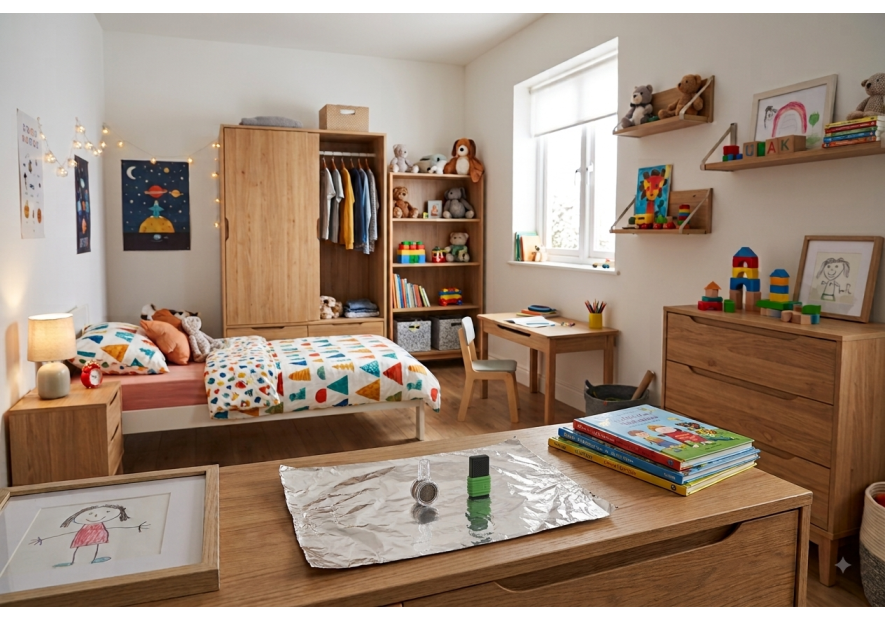
Place the samplersin the center of the main living area (living room) or in the bedroom, at breathing height (between 1 and 1.5 meters above the floor).
Avoid placing them directly near an open window, a mechanical ventilation system, a heat source, or in direct sunlight.
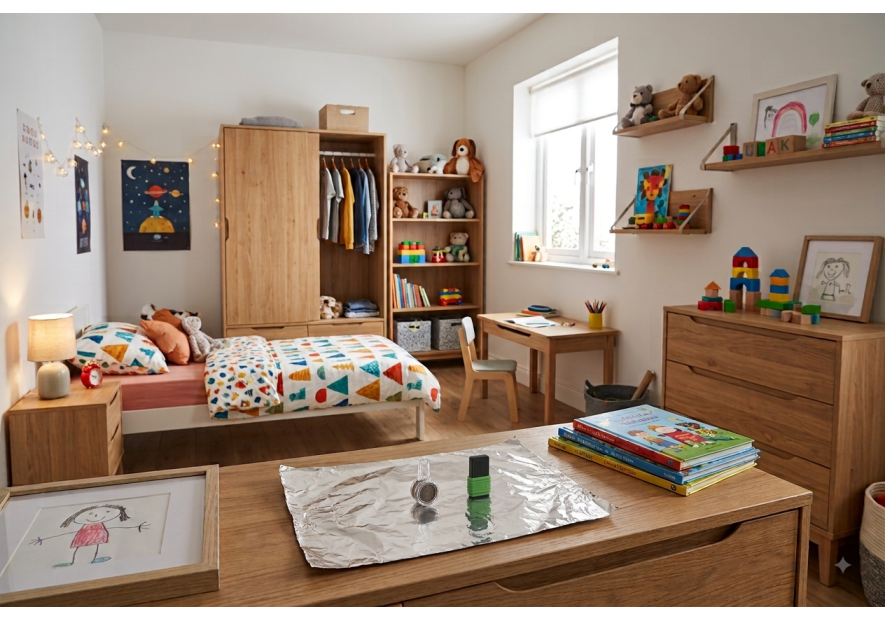
Furniture is often a source of VOC emissions; if the samplers must be placed on a piece of furniture, they should be positioned on top of a sheet of aluminum foil approximately A4 size.
Quantitative Laboratory Analysis and Expert Report
Once the 7-day period has ended, the evaluation process enters its final phase:
Packaging: The samplers are sealed in their original airtight packaging to immediately stop the sample collection and prevent any external contamination.
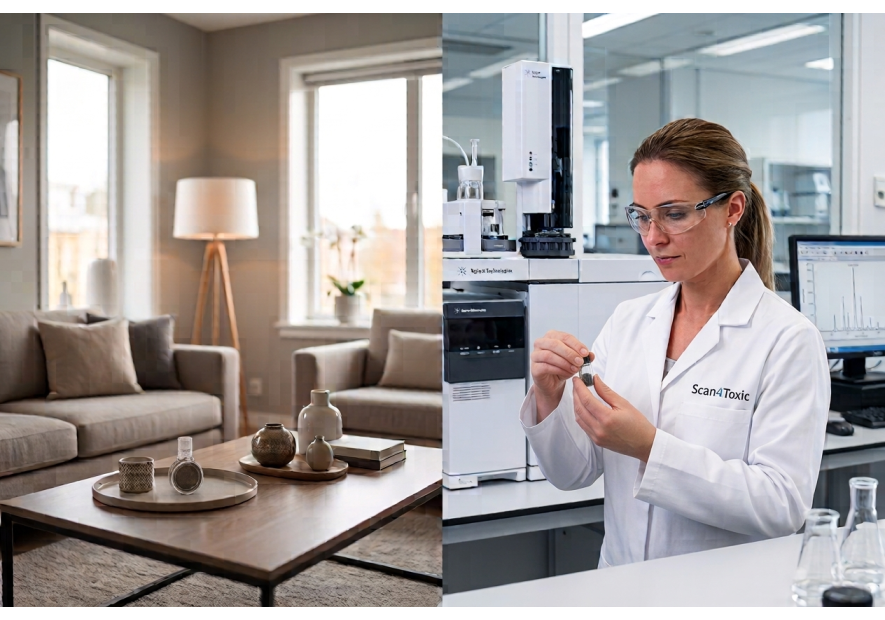
Shipping and Analysis: The Scan4Air samplers are then returned to the laboratory for a precise quantitative analysis of the captured VOCs. Chemists extract the pollutants through desorption before performing a quantitative analysis using chromatography (GC-MS for general VOCs, HPLC for aldehydes).
The interpretation report: The measured concentrations (µg/m³) are presented in a clear document and compared to the indoor air quality guidelines (VGAI) issued by ANSES. Specific data sheets are available for the VOCs analyzed, such as benzene and formaldehyde.
Conducting this assessment provides a rigorous scientific evaluation of the air quality in your home and allows you to take appropriate corrective measures (air exchange, elimination of emission sources).
Scan4Home - Indoor Air Scan4Home - Indoor Air
Complete test kit to measure Volatile Organic Compounds (VOCs)...
Complete test kit to measure Volatile Organic Compounds (VOCs) and aldehydes in indoor air in homes and offices. Measures over 60 VOCs and aldehydes. Indoor air contains many toxic chemicals, and testing it allows you to take steps to protect your health on a daily basis.
Price €299.00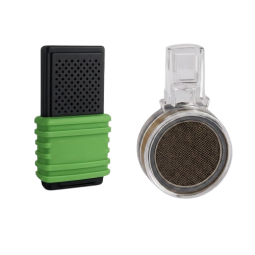

Scan4Air - Indoor Air Samplers Scan4Air - Indoor Air Samplers
These Scan4Toxic devices allow you to collect an air sample to...
These Scan4Toxic devices allow you to collect an air sample to assess indoor air pollution in your home caused by Volatile Organic Compounds (VOCs) and aldehydes, or to assess occupational exposure in the workplace. Indoor air contains many toxic chemicals, and testing it allows you to take steps...
Price €89.00