

Why Perform an Indoor Air Quality Test?
We now spend about 80% of our time in enclosed spaces—at home, in offices, or in schools—where the air is, on average, 5 to 10 times more polluted than outdoors. In these confined environments, pollutants accumulate without us even realizing it. Conducting an indoor air quality test has become an essential step in protecting the health of occupants and identifying the invisible sources of pollution that diminish our daily quality of life.
Pollution with Many Faces
Indoor air pollution is not a single phenomenon; it manifests itself in a wide variety of forms that require specific assessment methods:
Chemical pollution: This includes Volatile Organic Compounds (VOCs) and Semi-Volatile Organic Compounds (SVOCs) emitted by building materials, furniture, and cleaning products, as well as certain heavy metals, including lead, cadmium, and mercury.
Biological contamination: This includes the growth of mold, dust mites, and various allergens that thrive in conditions of excessive moisture.
Physical pollution: It consists of fine particles suspended in the air, as well as hazardous fibers such as asbestos in older buildings.
Radiological pollution: Radon, a naturally occurring radioactive gas, can seep into buildings and pose a major health risk if it accumulates.
Serious health impacts on occupants
Ignoring the composition of our indoor air exposes occupants to proven health risks. While the effects on respiratory health are the most immediate—with a rise in cases of asthma and allergies—the consequences are far more profound. Indoor air pollution contributes significantly to the development of cancers, neurological disorders, and endocrine disruptions.
Why Choose Scan4Home Kits?
Given these risks, assessing the situation is an essential step in implementing effective corrective measures. The Scan4Home testing kits enable a thorough, simple, and reliable indoor air quality test that is accessible to both individuals and professionals.
These solutions are particularly recommended for protecting the most vulnerable populations. Young children, for example, are much more sensitive to pollution than adults. Their still-developing immune systems, combined with a faster rate of lung ventilation (relative to their body weight) and the time they spend on the ground, significantly increase their level of exposure.
By choosing a Scan4Home indoor air quality test, you’ll receive an accurate assessment that allows you to address the source of pollutants. Whether through better ventilation management, choosing healthier materials, or eliminating VOC sources, every measure taken based on an indoor air quality test helps improve your living environment in the long term. Don’t wait until symptoms appear to check the air quality in your home: conducting an indoor air quality test is the first step toward a healthier home.
Scan4Air - Indoor Air Screening Scan4Air - Indoor Air Screening
Complete test kit to measure Volatile Organic Compounds (VOCs)...
Complete test kit to measure Volatile Organic Compounds (VOCs) in indoor air pollution in homes and offices, featuring non-targeted screening and quantitative analysis of over 30 VOCs. Indoor air contains many toxic chemicals, and testing it allows you to take steps to protect your health on a...
Price €499.00
Scan4Home - Indoor Air Scan4Home - Indoor Air
Complete test kit to measure Volatile Organic Compounds (VOCs)...
Complete test kit to measure Volatile Organic Compounds (VOCs) and aldehydes in indoor air in homes and offices. Measures over 60 VOCs and aldehydes. Indoor air contains many toxic chemicals, and testing it allows you to take steps to protect your health on a daily basis.
Price €299.00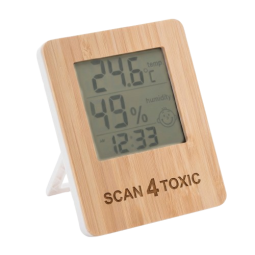

Scan4Home - Mold Prevention Scan4Home - Mold Prevention
Electronic sensor for measuring ambient temperature and...
Electronic sensor for measuring ambient temperature and humidity. Prevention of indoor air pollution caused by mold.
Price €19.90